Leave Your Message
A Coil Fork uses a steel spring to support the rider and control front-wheel movement. Unlike an air fork, it does not depend on compressed air for its main spring rate. The spring compresses when the wheel meets a rock, root, or sharp landing. Hydraulic damping then manages how quickly the fork moves and returns. In practical terms, the fork feels calm and consistent. That matters on long descents.
Industry research places this technology within a growing bicycle market. Grand View Research’s Bicycle Market Size, Share & Trends Analysis Report identifies rising interest in mountain bikes, trail riding, and performance components through 2030. PeopleForBikes’ 2024 participation research also reports sustained interest in cycling across the United States. These reports do not measure coil forks directly. However, they show why suspension design deserves careful attention. Market growth alone does not prove that one spring system suits every rider.
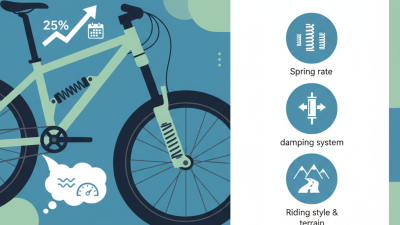
A coil fork can offer excellent small-bump sensitivity and predictable performance. It also works well for riders who prefer a planted front wheel. The steel spring adds weight, and spring changes usually require physical replacement. That limitation is easy to overlook. Fork setup depends on rider mass, terrain, travel, and riding style. A soft spring may dive during braking. A hard spring may feel harsh over repeated roots. Technical guidance from manufacturers such as FOX and RockShox emphasizes correct sag, damping adjustment, and regular service. Still, published specifications cannot replace trail testing. Your hands, wrists, and front tire often reveal problems first. Understanding how a Coil Fork works makes those clues easier to interpret.
What Is a Coil Fork and How Does It Work?
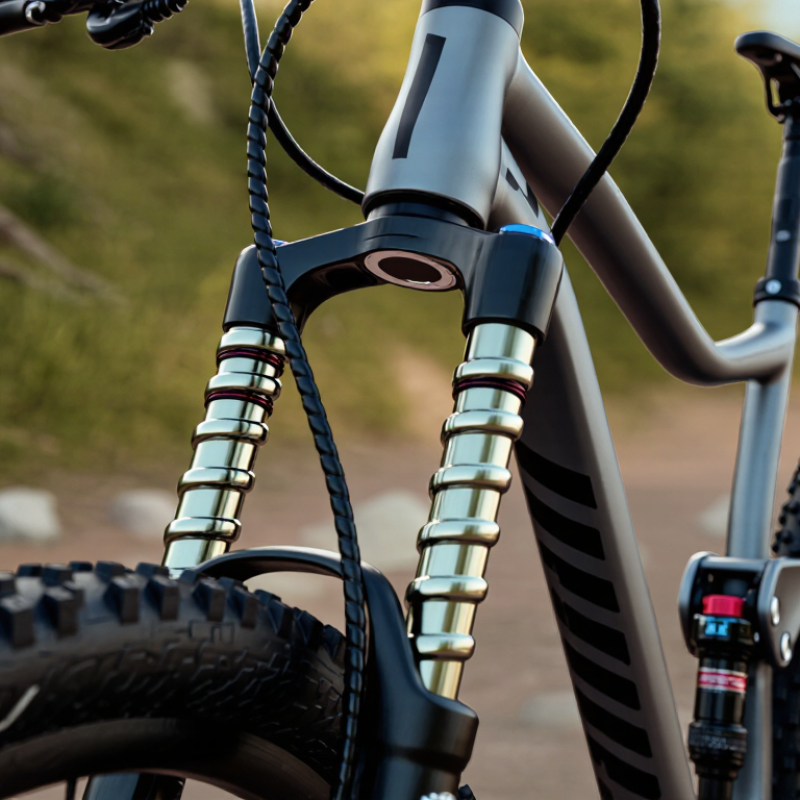
A coil fork is a bicycle suspension fork that uses a steel coil spring to support the rider and absorb impacts. The spring sits inside one fork leg, usually around a guide rod or cartridge. When the front wheel meets a rock, curb, or root, the spring compresses and allows the wheel to move upward.
That movement reduces harsh feedback through the handlebars. An oil damper controls how quickly the fork compresses and returns. Compression damping manages the inward movement, while rebound damping slows the spring’s release. Without damping, the fork could bounce repeatedly after one impact. It feels unsettled.
A coil fork often delivers sensitive movement over small bumps. This can improve traction on wet roots, loose soil, and rough descents. Its performance also stays relatively consistent during long, demanding rides because steel springs are less affected by temperature changes than air chambers. However, a coil system can weigh more and may require a different spring for a lighter or heavier rider. Preload can adjust the starting position, but it does not truly change the spring rate.
In practical setup, a rider should check sag, steering feel, and available travel before riding aggressively. A fork that sits too deep may feel vague during braking. A fork with excessive preload may feel harsh. I have found that small adjustments are easy to overestimate, especially when tire pressure changes at the same time. Regular inspection of seals, bushings, and damping oil also matters, because contamination can quietly reduce smoothness.
| Component or Feature | Typical Characteristics | How It Works or Why It Matters |
|---|---|---|
| Definition | A coil fork is a bicycle suspension fork that uses a metal coil spring as its primary spring element. | When the front wheel encounters an obstacle, the spring compresses and allows the fork to move through its travel, helping the wheel maintain contact with the ground. |
| Coil Spring | The steel spring is designed with a specific rate, commonly described as the force required for each unit of compression. | A higher-rate spring generally supports heavier loads or harder impacts, while a lower-rate spring is more suitable for lighter riders or a softer initial feel. |
| Fork Travel | Common mountain-bike coil forks may provide approximately 80–200 mm of travel, depending on the intended use. | Travel is the distance the fork can compress. More travel can absorb larger impacts, but it may add weight and alter the bicycle’s steering geometry. |
| Damping System | Most modern coil forks use oil damping, often with separate controls for compression and rebound. | Damping controls the speed of suspension movement. Compression damping manages how quickly the fork compresses, while rebound damping controls how quickly it returns after compression. |
| Preload Adjustment | Preload changes the initial compression of the coil spring. It is commonly adjusted with a dial or threaded mechanism. | Increasing preload can reduce excessive sag and provide a firmer starting position, but it does not fundamentally change the spring’s rate. |
| Sag | Sag is the amount the fork compresses under the rider’s normal weight and riding position. A typical setup target is often about 15–30% of total travel. | Correct sag keeps the fork positioned within its usable travel, allowing it to extend over dips and compress over bumps without frequently reaching either limit. |
| Small-Bump Sensitivity | Coil springs generally provide low initial resistance and consistent spring behavior. | This can help the fork respond smoothly to roots, stones, braking bumps, and other small irregularities, improving traction and comfort. |
| Progression | A standard coil spring has a relatively linear response unless the fork uses progressive spring geometry or additional bottom-out control. | Because the force increases at a fairly steady rate, the fork may require hydraulic damping, spring progression, or bottom-out resistance to prevent harsh impacts at full compression. |
| Bottom-Out Control | Bottom-out control may come from hydraulic damping, an elastomer, a bumper, or a progressive spring feature. | These systems slow or cushion the final part of the stroke, reducing the impact that occurs when the fork reaches its maximum compression. |
| Ride Feel | The ride is commonly described as smooth, predictable, and consistent across repeated impacts. | The spring’s mechanical behavior is less affected by temperature changes than that of an air spring, helping maintain a familiar feel in varying conditions. |
| Weight | Coil forks are often heavier than comparable air-sprung forks because they use a metal spring and additional supporting hardware. | The extra mass can improve durability and sensitivity for some applications, but it may be less desirable where low bicycle weight is a priority. |
| Spring-Rate Changes | Changing the effective spring rate usually requires installing a coil with a different rate or replacing a spring assembly. | This provides a reliable setup for a specific rider and use case, but it is generally less convenient for frequent adjustments than changing air pressure in an air-sprung fork. |
| Maintenance | Routine care includes cleaning the stanchions, checking seals, inspecting the spring area, and servicing the damper and lubrication system at suitable intervals. | Regular maintenance reduces contamination, preserves smooth movement, limits wear, and helps the fork deliver consistent damping performance. |
| Best-Suited Uses | Coil forks are well suited to demanding trail riding, downhill riding, freeride applications, and riders who prioritize sensitivity and consistency. | They are especially useful when reliable performance under repeated impacts is more important than minimum weight or rapid spring-rate adjustment. |
| Main Advantages | Consistent spring behavior, strong small-bump response, good traction, and relatively straightforward spring mechanics. | These characteristics can make a coil fork feel controlled and predictable on rough terrain, particularly when the spring rate and damping are correctly matched to the rider. |
| Main Limitations | Higher weight, less convenient spring-rate adjustment, and potentially less natural progression than an air spring. | Incorrect spring selection may cause excessive sag, insufficient support, or frequent bottom-out, so setup must account for rider weight, riding style, and terrain. |