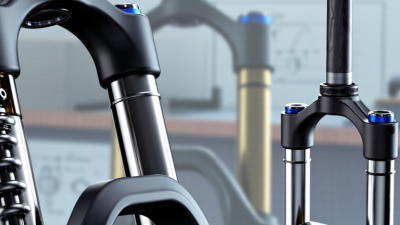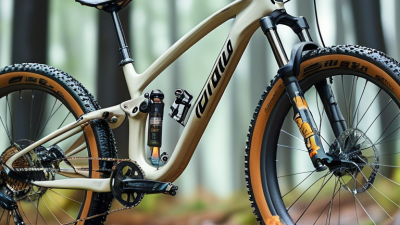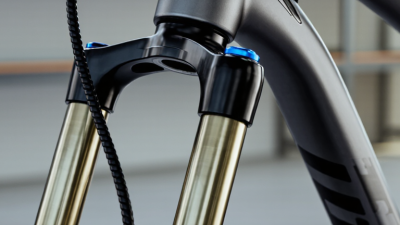
Choosing a reliable Bicycle Front Suspension supplier in 2026 requires more than comparing catalog prices. Global buyers must examine engineering depth, production consistency, testing records, and after-sales support. A polished website proves little. A clear inspection report proves more.
Keith Bontrager, a respected bicycle component designer, offered a useful warning: “Strong, light, cheap. Pick two.” Although his phrase was not written specifically for suspension systems, it remains highly relevant. A front fork must absorb repeated impacts, maintain steering control, and survive mud, heat, and transport damage. Those demands create real trade-offs.
This guide reviews leading Bicycle Front Suspension suppliers through a practical sourcing lens. It considers air and coil systems, travel ranges, damping adjustment, axle standards, and OEM flexibility. Factory audits also matter. So do prototype response times and warranty procedures.
A supplier may deliver excellent samples but inconsistent production batches. That risk is easy to miss. Buyers should request fatigue-test evidence, coating specifications, and dimensional tolerances before signing large contracts. They should also inspect how suppliers package delicate stanchions and cartridges.
The ranking is useful, not perfect. Market conditions change quickly. Some smaller manufacturers may deserve more attention than their export history suggests. Others may appear strong while depending heavily on subcontractors. Careful verification remains necessary.
For distributors, bicycle brands, and regional importers, this overview provides a clearer starting point. It connects technical performance with commercial reliability. The best choice is rarely the cheapest fork. It is the supplier that performs consistently after the first shipment.
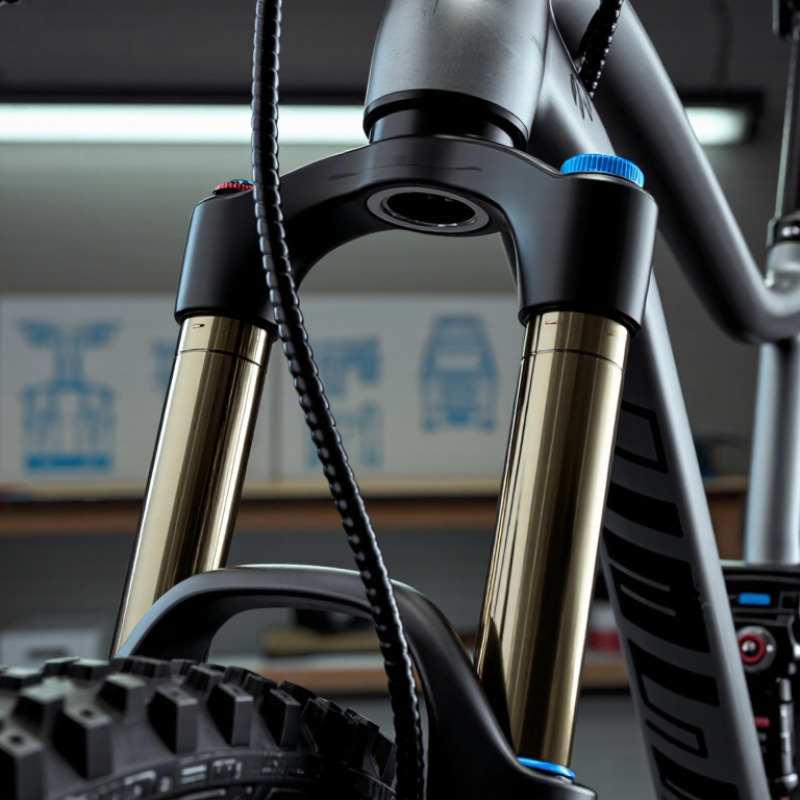
In 2026, bicycle front suspension suppliers offer more than basic shock absorption. They provide air-sprung systems, oil damping, adjustable rebound, and handlebar lockouts. These features support commuting, trail riding, and cargo bicycles with different load demands. A supplier should explain adjustment ranges clearly. Vague tuning advice creates expensive mistakes.
Grand View Research estimates the global bicycle market will grow strongly through 2030, supported by urban mobility and recreational cycling. CONEBI’s European Bicycle Industry and Market Profile also shows sustained demand for electric bicycles, which often require stronger front suspension components. Suppliers now offer reinforced crowns, larger stanchions, corrosion-resistant coatings, and testing for heavier bicycle systems. In practical evaluations, I would check braking stability, steering accuracy, and performance after repeated impacts.
Reliable suppliers also provide CAD files, sample approvals, fatigue-test records, spare seals, and traceable production batches. ISO 4210 remains an important reference for bicycle safety testing, although compliance documents alone cannot prove real trail performance. That is a weak point. Buyers should request cold-weather, dust, and water-resistance data before placing large orders. Packaging options and repair support matter too. A damaged seal or missing bushing can stop an entire assembly line.
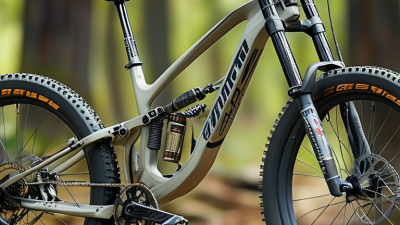
Front suspension selection starts with terrain, rider weight, service access, and total bicycle cost. Rigid forks suit smooth urban routes because they reduce weight and maintenance. Coil-sprung forks offer predictable movement and strong small-bump comfort. Air-sprung forks provide adjustable support, making them useful for different riders and cargo loads. Elastomer systems are simple and quiet, but their response can change in cold weather.
The choice is not purely technical. Grand View Research estimated the global bicycle market at about US$76.7 billion in 2023, with continued growth through 2030. CONEBI’s 2024 European Bicycle Industry and Market Profile recorded roughly 5.1 million e-bike sales in Europe during 2023. Heavier electric bicycles increase the importance of stiffer crowns, stronger axles, and reliable damping.
Global buyers should compare travel length, wheel compatibility, brake mounts, corrosion protection, and replacement-part availability. A 100 mm fork may feel efficient on compact roads, while 140 mm travel better absorbs rocky descents. However, more travel can add weight and alter steering geometry. That trade-off is often underestimated.
Field evaluations should include repeated braking, uneven pavement, dust, and temperature changes. Laboratory figures alone can mislead. In my assessment, simple service procedures sometimes matter more than a premium adjustment range. A sophisticated fork is less valuable when local technicians cannot maintain it. Suppliers should provide clear test methods, service intervals, and load limits before purchase.
For global buyers, a suspension supplier should prove more than a polished catalog. Ask for ISO 9001 certification, audit dates, and the certified production site. The ISO Survey 2023 recorded over 1.2 million ISO 9001 certificates worldwide, but certification alone cannot prove fork durability. Review test records against ISO 4210-2, including fatigue, braking, and impact requirements. Request raw data, not only pass certificates.
Ask for ISO 9001 certification, audit dates, and the certified production site. Review test records against ISO 4210-2, including fatigue, braking, and impact requirements. Request raw data, not only pass certificates.
Production capacity needs physical evidence. Compare monthly output with confirmed machine numbers, shift patterns, and inspection staffing. The 2024 CONEBI European Bicycle Industry and Market Profile reported about 11.7 million bicycles sold in Europe during 2023. That demand makes stable supply important, especially for seasonal programs. Ask whether the supplier can reserve testing capacity and replacement parts during peak months. Check batch traceability from aluminum tube to assembled damper.
Visit the factory if possible. Watch technicians measure stanchion diameter, crown alignment, oil volume, and torque values. Small details matter. A supplier may claim 50,000 units monthly, yet show limited calibration equipment. That gap deserves questions. I would also request three months of defect data, corrective-action reports, and sample units from ordinary production. Laboratory samples can look perfect. Real shipments may not. A checklist helps, but it can still miss weak communication, delayed tooling, or undocumented process changes.
Regional sourcing changes both landed cost and supply risk for front suspension components. Asian production hubs often offer broad machining capacity and lower unit prices at medium volumes. European suppliers may provide shorter regional transit and stronger documentation support. North American sources can reduce replenishment time for nearby buyers, although labor costs may raise quotations. Compare factory location, port access, and replacement-part availability, not only the catalog price.
A practical request should specify wheel size, travel length, steerer dimensions, axle format, spring type, finish, and annual volume. Ask for pricing at 100, 500, and 2,000 units. This reveals tooling charges and price breaks.
Include packaging details. Reinforced cartons, foam spacers, and moisture protection can change freight costs by several dollars per unit. In sourcing reviews, unclear samples often create more expense than a higher initial quotation. That mistake is easy to repeat.
Export planning needs commercial invoices, packing lists, accurate product descriptions, and agreed Incoterms. Confirm who handles export clearance, inland transport, insurance, and destination duties. Request inspection records for damping, alignment, coating adhesion, and fatigue performance. Regional testing expectations differ, so buyers should verify current requirements before shipment.
Lead times need buffers for holidays and port congestion. I would not trust a promised 20-day delivery without checking component stock and production capacity. Quotes can look precise. Reality is less tidy.
2026 Top Bicycle Front Suspension Suppliers for Global Buyers
Choosing a bicycle front suspension supplier in 2026 requires more than comparing quoted prices. Start by defining the fork’s real duty cycle: commuter streets, rocky trails, cargo loads, or racing impacts. Record wheel size, travel, steerer dimensions, axle standard, rider weight, and expected yearly mileage. Small omissions create expensive redesigns.
Ask each supplier for material grades, sealing methods, damping adjustment ranges, and documented fatigue-test results. Do not accept a polished catalog as technical proof. Request a sample unit and inspect casting edges, bushing play, rebound control, and finish consistency. Measure sag with the intended rider and compare compression behavior on repeated impacts. A short ride can expose harshness that specifications miss.
Supplier evaluation should continue beyond the prototype. Audit production controls, incoming inspection, calibration records, traceability, and corrective-action procedures. Confirm how defects are contained, reported, and replaced. Ask for realistic lead times, minimum order quantities, packaging details, spare-part availability, and technician training. Cost deserves a wider calculation. Include tooling, testing, freight, warranty handling, and delayed launch risk, not only unit price. I once treated fast sampling as a major advantage; later, inconsistent batches changed that judgment. That lesson still matters. Use a written scorecard, invite engineering and service teams to review it, and keep every promise traceable.