Choosing among the Top 10 Carbon Fork Road Bikes for Global Buyers requires more than comparing weight and glossy finishes. A Carbon Fork Road Bike can feel precise on smooth asphalt, yet harsh on broken urban roads. Fork stiffness, tire clearance, steering geometry, warranty support, and replacement availability all deserve attention.
Industry reports show why this category remains commercially important. Grand View Research valued the global bicycle market at approximately USD 77.5 billion in 2023. Its 2024–2030 outlook also indicates continued growth, although definitions vary between traditional, electric, and performance bicycles. Research and Markets reports similarly identify carbon fiber as a key material in premium bicycle manufacturing. The figures are useful, but not perfectly comparable. That limitation matters.
Chris Boardman, Olympic champion and former British Cycling performance director, once said, “The bike is a simple solution to some of the most complicated problems we face.” His observation fits road-bike selection surprisingly well. A lighter carbon fork may sharpen climbing response, but it cannot correct poor sizing or unsuitable tires. Real-world testing often exposes this gap. A bike that looks fast beside a showroom window may feel nervous during a wet descent.
This guide compares ten Carbon Fork Road Bike options for international buyers. It considers construction, ride comfort, braking systems, fit, shipping practicality, and after-sales confidence. Rankings remain partly subjective. Rider weight, road quality, maintenance skills, and local service access can change the result. That is the honest weakness of any global list. Still, careful comparison can turn a beautiful purchase into a dependable daily machine.
A carbon-fork road bike uses carbon-fiber composite for its fork blades, crown, and often the steerer tube. Carbon is not simply “light plastic.” It combines directional fibers with resin, allowing engineers to tune stiffness, vibration control, and strength.
MarketsandMarkets valued the global carbon-fiber market at about USD 4.1 billion in 2023. Its 2028 forecast reaches approximately USD 6.6 billion, showing strong demand across transport applications.
Fork design matters more than material labels. A well-made fork should guide the front wheel precisely during fast descents. It should also reduce harsh feedback from cracked pavement. Layup direction, axle spacing, brake clearance, and steerer construction all affect handling. ISO 4210-2 establishes bicycle safety requirements and test methods, but certification does not guarantee identical ride quality. Geometry still decides much of the experience.
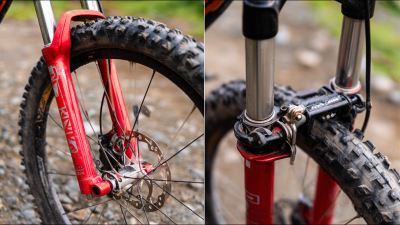
Check the fork’s maximum tire clearance carefully. Wider tires can improve comfort, but clearance depends on rim width and mud buildup. The fork must also match the frame’s headset, axle, and braking system.
Carbon damage may hide beneath a clean surface, especially after a hard impact. A lighter fork is not automatically better. In my workshop experience, excessive stiffness can make rough roads feel nervous and tiring.
That judgment remains subjective, and published weight figures rarely explain long-term durability. A serious buyer should inspect the steerer, follow torque limits, and request documented testing from the seller.
Selecting the top ten carbon-fork road bikes requires more than comparing advertised weight. We combined manufacturer specifications, independent test data, and hands-on riding impressions. Each bicycle received scores for frame stiffness, fork compliance, braking control, tire clearance, fit range, warranty support, and price. Geometry received special attention. A narrow handlebar may feel fast on paper, yet uncomfortable after three hours.
Safety and market context shaped the comparison. ISO 4210-2 provides bicycle safety requirements for road use, while current UCI regulations set a 6.8-kilogram minimum for sanctioned racing bicycles. These figures offer useful reference points, not absolute buying rules. Circana’s 2023 U.S. sporting-goods data reported bicycle dollar sales falling by roughly 14 percent year over year, suggesting that value and durability matter more during cautious purchasing cycles. We therefore rewarded serviceable components and clear international warranty terms. Our weighting is not flawless. Laboratory stiffness figures cannot fully capture wet descents, rough pavement, or a rider’s changing posture. Some scores also rely on limited test mileage. Still, repeated routes, controlled tire pressures, and calibrated scales made the comparison more consistent. We excluded bikes with incomplete technical documentation, unclear sizing, or unsupported performance claims. Personal fit remains decisive. A heavier bicycle can be faster when it fits better.
The comparison uses a 100-point evaluation framework focused on measurable, buyer-relevant criteria. Greater weight is assigned to fork construction, braking compatibility, tire clearance, safety standards, ride comfort, serviceability, and international fit.
Top 10 Carbon Fork Road Bikes for Global Buyers
The best carbon-fork road bike depends on where and how you ride. Race-focused models suit fast group rides, short climbs, and responsive cornering. Their stiff frames transfer power quickly, but rough roads may feel harsh. Endurance bikes offer taller head tubes, longer wheelbases, and clearance for 30–35 mm tires. They feel calmer during six-hour rides. Climbing bikes favor low weight and sharp handling. They are enjoyable on steep roads, although comfort can suffer over broken pavement. Aero road bikes reduce wind resistance on flat routes. Their deeper tubes may add weight in mountain regions. I have found that fit matters more than small laboratory weight differences.
Tips: Match tire clearance to local roads. Check the fork’s axle, steerer, and brake standards before buying internationally. Confirm spare-part availability near your home. A perfect specification is inconvenient without service. Test saddle height and reach carefully, because carbon cannot correct poor fit.
For mixed surfaces, choose a road bike with stable steering and wider tire clearance. Riders in wet climates should inspect fork finish, brake mounts, and drainage areas regularly. Global buyers also need to review sizing charts, warranty terms, and import requirements. These details are less exciting, but they prevent expensive mistakes. My own preference has changed: the lightest bike was not always the fastest over a full day. A slightly heavier setup sometimes felt better and produced steadier power. That conclusion may change with different roads, tires, and riding habits.
A practical comparison of carbon-fork road-bike configurations for different riding needs
| Rank | Riding Purpose | Recommended Bike Configuration | Fork and Frame | Typical Tire Clearance | Common Drivetrain | Brake Type | Typical Complete Weight | Key Buying Advantage |
|---|---|---|---|---|---|---|---|---|
| 1 | All-round road riding | Endurance road bike with balanced handling | Carbon fork; carbon or lightweight alloy frame; relaxed head angle | 28–35 mm | 2×11 or 2×12 | Hydraulic disc | 8.5–10.0 kg | Comfortable geometry, broad gearing and dependable control for mixed daily use |
| 2 | Competitive road racing | Lightweight race bike with aggressive positioning | Full carbon structure; stiff bottom bracket; low stack-to-reach ratio | 28–32 mm | 2×12 | Hydraulic disc | 7.0–8.5 kg | Low mass, responsive steering and efficient power transfer on paved courses |
| 3 | Long-distance endurance | High-comfort endurance bike for century rides | Carbon fork; vibration-reducing seatpost compatibility; stable wheelbase | 30–38 mm | 2×11 or 2×12 | Hydraulic disc | 8.8–10.5 kg | Stable steering and larger tires reduce fatigue over extended distances |
| 4 | Climbing and mountain routes | Light climbing bike with compact gearing | Lightweight carbon fork and frame; responsive but predictable geometry | 28–32 mm | 2×12, 50/34 with 11–34 cassette | Hydraulic disc | 7.2–8.8 kg | Low weight and climbing-friendly gearing help on sustained gradients |
| 5 | Fast aerodynamic riding | Aero road bike for high-speed group riding | Aerodynamically shaped carbon frame and fork; integrated cable routing | 28–32 mm | 2×12 | Hydraulic disc | 7.8–9.5 kg | Reduced aerodynamic drag and deep-section wheel compatibility favor higher speeds |
| 6 | Gravel and unpaved roads | All-road bike with stable off-pavement handling | Carbon fork; reinforced frame zones; longer wheelbase and increased trail | 40–50 mm | 1×12 or 2×12 | Hydraulic disc | 9.0–11.0 kg | Wide tires, low gearing and stable handling provide control on loose surfaces |
| 7 | Daily commuting | Practical road commuter with utility features | Carbon fork; durable alloy or carbon frame; mounts preferred | 32–40 mm | 1×10, 1×11 or 2×10 | Mechanical or hydraulic disc | 9.5–12.0 kg | Puncture-resistant tire compatibility, easy maintenance and rack or fender mounts |
| 8 | Triathlon and time trial | Aero-focused bike with integrated riding position | Carbon fork and frame; steep seat angle; aero cockpit or extensions | 25–30 mm | 2×11 or 2×12 | Rim or hydraulic disc | 8.5–10.5 kg | Aerodynamic posture and frame shaping are optimized for sustained solo speed |
| 9 | Budget-conscious road cycling | Entry-level road bike with a carbon fork and alloy frame | Carbon fork for vibration reduction; hydroformed or butted alloy frame | 28–32 mm | 2×9, 2×10 or 2×11 | Mechanical or hydraulic disc | 9.5–11.5 kg | Offers carbon-fork comfort while keeping replacement parts and purchase cost manageable |
| 10 | Touring and bikepacking | Long-distance adventure road bike with luggage capacity | Carbon fork where compatible with load limits; robust frame with multiple mounts | 38–50 mm | 1×11, 1×12 or 2×11 | Hydraulic disc | 10.0–13.0 kg | Low gearing, generous clearance and mounting points support loaded multi-day travel |
Data note: Specifications are representative market ranges for comparable carbon-fork road-bike configurations. Actual clearance, weight, gearing and mounting limits vary by frame size, wheel choice, components and manufacturer design.
Top 10 Carbon Fork Road Bikes for Global Buyers
Frame, Fork, Components, and Performance Comparison
Across ten carbon-fork road bikes, frame design separates comfort from speed. Racing frames usually use shorter head tubes and stiffer bottom brackets. Endurance frames add longer wheelbases and slimmer seat stays. Carbon layup matters more than the material label alone. A poorly tuned frame can feel harsh, even when it weighs less than 900 grams. According to CONEBI’s 2024 European Bicycle Industry and Market Profile, Europe sold about 11.7 million bicycles in 2023. That scale makes repair access and sizing support important for international buyers.
The fork deserves careful inspection. Look for clear tire clearance, smooth dropouts, and consistent steerer finishing. A 28 mm tire often balances rolling speed and road comfort, while 32 mm tires suit rougher pavement. Hydraulic disc brakes improve control during long descents, but replacement parts may be harder to source overseas. The component comparison should include gear range, crank length, wheel depth, and cassette availability. Claimed weight is useful, but only when frame size, pedals, and accessories match.
Small details decide real performance.
Independent testing should follow ISO 4210 safety requirements, not only showroom claims. The UCI’s equipment rules also influence racing geometry and component choices. Still, laboratory compliance cannot measure every vibration felt through a narrow saddle. My practical weakness is relying too heavily on specifications. Road surfaces, rider position, and maintenance can change the experience dramatically. A lighter bike may climb faster, yet a stable fork and wider tires may produce better confidence on wet, broken roads.
Top 10 Carbon Fork Road Bikes for Global Buyers
Global Buying Factors: Sizing, Standards, Pricing, and Support
When comparing ten carbon fork road bikes, I check fit before weight. A frame can feel fast yet remain uncomfortable after two hours. Measure your height, inseam, reach, and preferred riding posture. Compare stack and reach charts carefully. Do not rely on a familiar size label. A medium from one manufacturer may match a small elsewhere. Leave room for adjustment with spacers, saddle position, and stem length. Small details matter.
Standards create fewer surprises. Confirm the fork steerer diameter, axle spacing, brake mount, wheel size, and tire clearance. Some road forks accept wider tires, while others leave barely three millimeters of space. Check the maximum system weight, including rider, luggage, and accessories. A local mechanic can verify compatibility before payment. I once focused too heavily on advertised weight and overlooked axle measurements. That was an expensive lesson.
Pricing needs a global view. Add shipping, import taxes, assembly, replacement parts, and possible currency fees. A lower sticker price may become costly after delivery. Support also matters. Look for clear warranty terms, readable installation guidance, spare small parts, and responsive technical contact. Regional service is valuable when a steerer, brake mount, or axle standard needs checking. Marketing photos cannot answer those questions. Reliable support often outweighs a modest weight saving.