Leave Your Message
Choosing the right Bicycle Chopper Forks requires more than admiring a long, polished silhouette. Global buyers must examine steerer diameter, axle spacing, rake, tire clearance, material, weld quality, and brake compatibility. A fork may look dramatic in photographs yet create poor handling or installation problems on a real bicycle.
Keith Bontrager’s familiar design maxim remains useful here: “Strong, light, cheap—pick two.” Chopper forks often prioritize visual impact and extended geometry, so buyers should confirm load ratings and manufacturing details before ordering. Ask for accurate drawings, tested specifications, surface-treatment information, and replacement-part availability. Small details matter. A missing measurement can delay an entire build.
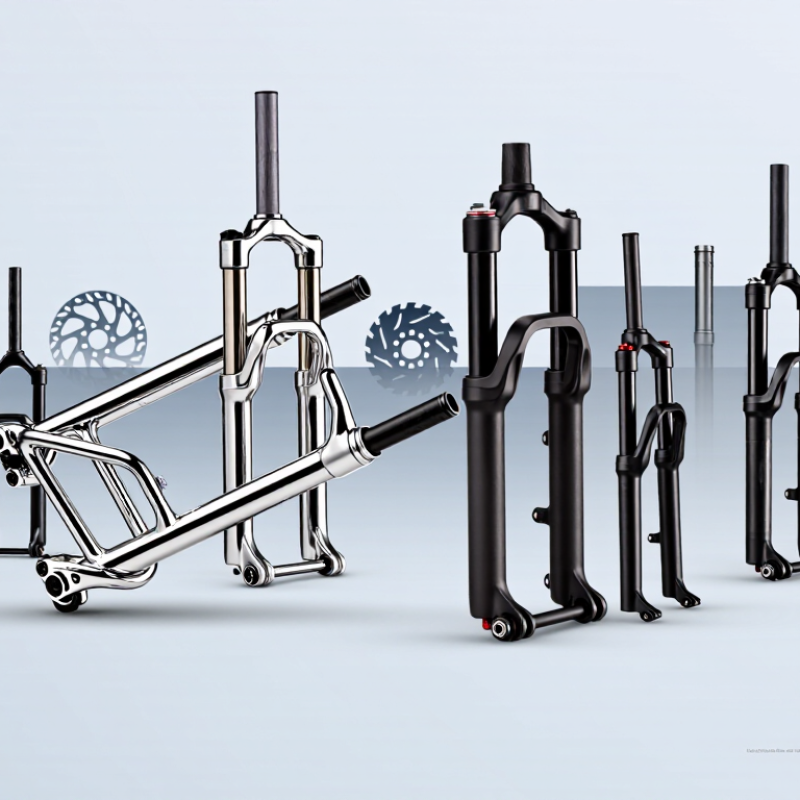
This guide compares leading Bicycle Chopper Forks for international purchasing decisions. It considers steel and aluminum construction, finish durability, steering stability, shipping practicality, and supplier communication. We also examine how each fork performs with wide tires, custom frames, disc or rim brakes, and different riding positions. These factors are practical, not decorative.
Still, no catalog is flawless. Product pages may use inconsistent terms, and some performance claims need independent verification. Buyers should treat photographs as evidence of appearance, not proof of strength. Confirm dimensions directly with the manufacturer. Check regional safety requirements as well.
The strongest choice is not always the longest fork or the cheapest offer. It is the model that matches the frame, rider, terrain, and maintenance plan. This comparison aims to make that decision clearer, while recognizing that custom bicycle projects sometimes require careful compromise.
Top Bicycle Chopper Forks for Global Buyers
Bicycle Chopper Fork Basics and Key Design Features
A chopper fork changes more than appearance. It affects steering, wheel alignment, braking, and rider comfort. The fork’s length and rake determine trail, which influences stability at different speeds. A longer fork often creates a relaxed look, but it can make tight turns slower and less predictable.
Measure the steerer tube, axle width, wheel diameter, and tire clearance before choosing a fork. The dropouts should hold the axle securely without forcing the wheel into position. Check the headset standard carefully. Small measurement errors can create looseness or dangerous misalignment. A small mistake matters.
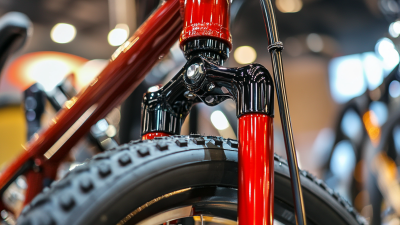
Material also shapes performance. Steel forks usually offer strong impact resistance and easier repair options. Aluminum versions can reduce weight, but they require careful inspection around welds and mounting points. Look for smooth welds, consistent tubing, and a straight steerer. Decorative finishes should never hide cracks, dents, or poor surface preparation.
Brake compatibility deserves close attention. Confirm the mounting type, rotor clearance, and cable or hose routing. Some traditional chopper designs have limited space for modern braking systems. That detail is easy to miss. In workshop fitting, builders sometimes focus on dramatic rake and overlook practical service access. I would question any fork that looks impressive but leaves little room for tire movement, brake adjustment, or routine inspection.
| Design Dimension | Common Specification or Range | Why It Matters | Key Buyer Check |
|---|---|---|---|
| Fork Type | Rigid chopper fork, telescopic suspension fork, or springer-style fork | The fork type affects ride comfort, steering response, weight, maintenance, and visual style. | Choose a rigid design for simplicity and custom styling; choose suspension when impact comfort is a priority. |
| Wheel Compatibility | Common bicycle wheel diameters include 20, 24, 26, 27.5, and 29 inches | The wheel diameter must match the fork, brake position, frame geometry, and tire clearance. | Confirm the actual tire outside diameter and rim width rather than relying only on the nominal wheel size. |
| Axle Width | Typical front hub spacing includes approximately 100 mm for standard bicycle hubs; wider systems may use other dimensions | Incorrect spacing can prevent the wheel from seating correctly or place excessive load on the hub and fork. | Measure the front hub OLD (over-locknut dimension) and verify axle diameter and axle style. |
| Steerer Tube Standard | Common standards include 1 inch threaded, 1 1/8 inch threadless, and tapered systems | The steerer must fit the head tube, headset, stem, and handlebar arrangement. | Check steerer diameter, length, threading, crown-race seat, and headset compatibility before ordering. |
| Fork Rake / Offset | Often approximately 35–60 mm on bicycle forks, with custom chopper designs varying beyond this range | More offset generally reduces trail and can make steering feel quicker; less offset generally increases trail and stability. | Evaluate rake together with head-tube angle, wheel size, and intended riding speed. |
| Head-Tube Angle | Many bicycle designs use approximately 68–75 degrees; chopper-style builds may use a slacker angle | A slacker head angle can create a longer, more relaxed appearance but may slow steering and increase turning clearance requirements. | Use the complete frame-and-fork geometry rather than selecting a fork by length alone. |
| Axle-to-Crown Length | Varies widely by wheel size, suspension travel, frame geometry, and chopper styling | Fork length changes the front ride height, head angle, bottom-bracket position, and overall handling. | Compare the replacement fork's axle-to-crown measurement with the original or planned frame geometry. |
| Material | Common materials include heat-treated steel, chromoly steel, aluminum alloy, and stainless steel | Material selection influences strength, weight, corrosion resistance, weldability, and appearance. | For welded custom forks, confirm material grade, weld quality, heat treatment, and documented load testing. |
| Blade Construction | Single-piece blades, twin-blade forks, tubular legs, or boxed and reinforced structures | The blade profile affects stiffness, lateral alignment, vibration behavior, and visual proportions. | Look for even alignment, adequate bracing, smooth weld transitions, and no visible bending or distortion. |
| Brake Mount | No brake mount, rim-brake bosses, mechanical or hydraulic disc mount, or custom mount | Brake compatibility is a safety-critical part of the fork design. | Verify mount type, rotor or rim clearance, mounting-hole spacing, and cable or hose routing. |
| Tire Clearance | Clearance must accommodate tire width, rim width, mudguards, and wheel flex | Insufficient clearance can cause rubbing, unstable handling, or sudden wheel interference. | Allow practical side and crown clearance for the fully inflated tire and intended riding conditions. |
| Steering Stop | Frame-mounted, fork-mounted, or integrated steering-stop arrangement | A steering stop helps prevent cables, frame tubes, and fork components from being damaged during full-lock turns. | Confirm that the fork and frame have compatible stop locations and sufficient turning clearance. |
| Suspension Travel | Rigid forks have 0 mm travel; suspension versions commonly range from short urban travel to approximately 100 mm or more | Travel changes front-end height dynamically and must match the frame's intended suspension geometry. | Do not replace a rigid fork with a long-travel suspension fork without checking geometry and structural compatibility. |
| Load Consideration | Use only within the fork maker's stated rider, cargo, wheel, and riding-condition limits | Chopper bicycles may have extended front ends, heavy accessories, or custom loads that increase bending forces. | Request a verified maximum system load and clarify whether it applies to ordinary road use or impact-oriented riding. |
| Corrosion Protection | Powder coating, wet paint, plating, anodizing, or stainless-steel construction | Surface treatment protects the fork from moisture, road salt, scratches, and storage-related corrosion. | Check coating coverage inside the steerer, around dropouts, and at welded joints; repair exposed steel promptly. |
| Installation Requirements | Correct headset, crown race, stem, axle, brake hardware, spacers, and torque settings | Even a dimensionally compatible fork can be unsafe if installed with mismatched or incorrectly tightened parts. | Use the specified torque values and have the assembly inspected by a qualified bicycle mechanic. |
| Best Use Case | Show bikes, relaxed pavement riding, cruising, commuting, or custom builds depending on design certification | A visually dramatic fork is not automatically suitable for high-speed, off-road, jumping, or heavy-load use. | Match the fork's tested purpose with the intended terrain, speed, rider weight, and accessories. |