Leave Your Message
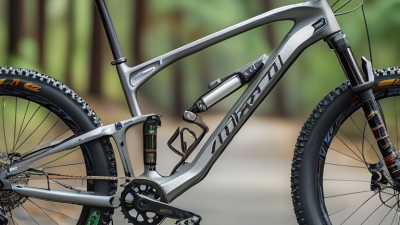
Choosing the right Coil Fork supplier in China takes more than comparing unit prices. Buyers need evidence of consistent engineering, controlled production, and dependable communication. A polished catalog is not proof.
Grand View Research’s 2024 global bicycle market analysis valued the market at USD 64.4 billion in 2023 and projected continued growth. That figure covers bicycles broadly, not coil forks specifically. Still, it signals a competitive market where component quality can shape a brand’s reputation. The report is useful context, not a substitute for checking a supplier’s actual capabilities. Small details matter: steerer dimensions, axle spacing, travel, spring rate, and damping must match the intended frame and riding conditions.
A credible supplier should explain its inspection process and provide clear specifications for samples and production batches. Ask how it checks spring consistency, surface finish, and assembly quality. Request relevant test records, material details, and a sample you can inspect or test. ISO 4210 provides bicycle safety requirements that may inform product evaluation, but its relevance depends on the component and application. Verify claims rather than assuming a certificate covers every fork model. That is easy to miss.
Price still matters. Yet an unusually low quote may leave questions about tolerances, batch variation, or after-sales support. Compare written specifications, sample results, production lead times, and response quality. A supplier’s answers should be specific. They should also be consistent. No report can make the decision for you; careful verification can.

Define the load before comparing coil fork suppliers. Record the coil’s maximum mass, outside diameter, bore diameter, width, and intended orientation. Note whether the fork carries one coil or several, and whether handling is occasional or continuous. A small mismatch matters. Coil diameter affects tine length and clearance; bore size affects support geometry. Specify the forklift or carrier model, rated capacity, and load center too. The attachment’s own weight reduces the machine’s remaining capacity.
OSHA’s powered-industrial-truck safety materials cite estimates of about 85 forklift-related deaths and 34,900 serious injuries annually in the United States. That risk makes capacity and visibility practical specification points, not paperwork. Ask suppliers to state the attachment’s weight, rated load, required hydraulic flow, and effect on the truck’s capacity. Request a dimensioned drawing showing tine spacing, contact surfaces, and clearances around the coil. Then compare the drawing with real loads and aisle constraints. A tidy drawing can still miss a snagging edge or poor sightline; check it against a site photo, if available. I would not assume a standard design fits. Small detail. Ask how the supplier verifies load ratings and what inspection records accompany each unit.
| Specification Dimension | Information to Provide | Example or Practical Guidance | Why It Matters When Selecting a Supplier |
|---|---|---|---|
| Coil weight | Minimum, typical, and maximum coil weight, including any packaging or protective materials. | For example: 1,200 kg typical; 2,000 kg maximum. Use actual measured or documented load weights. | The supplier needs the maximum load to size the attachment and check the forklift’s residual capacity at the actual load center. |
| Coil dimensions | Minimum and maximum outside diameter, inside diameter, coil width, and any dimensional variation. | Provide a dimensioned drawing or measurements for the smallest and largest coils in the product range. | Contact surfaces and clearance must suit the full size range while avoiding interference with the coil, mast, or attachment. |
| Coil orientation and handling method | State whether coils are stored and transported eye-horizontal or eye-vertical, and describe how they are picked up and set down. | Include the required pickup direction and whether the coil must be rotated during handling. | Handling orientation affects attachment design, operating clearances, and the required number and type of functions. |
| Coil surface and protection | Identify the material and finish, such as steel, aluminum, or coated material, and define acceptable contact marks or damage. | Describe any required protective contact surfaces and whether the coil edges or wrapping need special care. | The supplier can recommend suitable contact geometry and protection for the load and workplace conditions. |
| Forklift details and capacity | Provide make and model, rated capacity, load center, lift height, mast type, and the forklift data plate or capacity chart. | Confirm the capacity with the attachment installed; the usable capacity may be lower than the truck’s nominal rating. | Attachment weight and forward load center affect residual capacity. Confirm the final configuration with the forklift manufacturer or authorized dealer. |
| Carriage and mounting interface | Provide the carriage class, measured carriage dimensions, and any relevant interface details or photographs. | Ask the supplier to confirm compatibility with the truck’s carriage and applicable ISO 2328 interface requirements. | Correct fit is essential for secure mounting, proper engagement, and safe operation. |
| Hydraulic requirements | Specify the required functions and provide the forklift’s available hydraulic flow, operating pressure, and hose or port details from its documentation. | Confirm whether the truck has the necessary auxiliary hydraulic circuit and whether additional hoses or controls are needed. | The attachment must match the forklift’s hydraulic system. Requirements should be confirmed against the truck and attachment documentation rather than assumed. |
| Operating environment | Describe indoor or outdoor use, temperature, moisture, dust, corrosive exposure, and floor conditions. | Include relevant conditions such as cold storage, outdoor yards, or frequent washdown. | Environmental conditions influence material, finish, component selection, maintenance needs, and service life. |
| Work cycle and layout | Estimate handling frequency, travel distance, stacking height, aisle width, and the number of shifts. | Share a simple workflow description or site layout, including pickup and delivery points. | The duty cycle and available space help the supplier assess suitability, maneuverability, and operational efficiency. |
| Standards and documentation | State the destination market and request applicable design, inspection, operating, and maintenance documentation. | Ask for drawings, rated-capacity information, installation instructions, and inspection or maintenance guidance for the proposed configuration. | Documentation supports technical review, installation, operator training, and compliance checks in the destination market. |
| Validation before purchase | Request a configuration drawing and written confirmation of fit, capacity, required hydraulics, and included components. | Compare the proposal with the forklift data plate, coil measurements, and actual operating conditions before approving production. | A documented review helps identify mismatches early and gives both parties a clear specification for supply and acceptance. |
Note: Examples are for specification planning only. Final attachment selection and rated capacity should be confirmed for the exact forklift, attachment, load, and operating conditions.