Leave Your Message

What Are the Best Bicycle Chopper Forks in 2026?

Choosing the best Bicycle Chopper Forks in 2026 is about more than getting a long, dramatic front end. Fork length, axle spacing, steering geometry, and brake compatibility all affect how a bicycle handles. A fork that looks right in a product photo may feel awkward on a tight turn or sit poorly with the frame. Small measurements matter.

This guide compares the details riders can check: material, finish, wheel fit, mounting points, and manufacturer specifications. Sheldon Brown’s practical repair writing is a useful reminder to treat fit as a technical question, not just a styling choice. A concise line for this guide is: “Measure the fit before chasing the look.” That is an editorial summary, not a verified quotation from Brown. The distinction matters; specialist advice should not be invented to sell a part.

Expect trade-offs. A longer fork can change steering response, while a heavier steel option may suit a particular build better than a lighter one. There is no universal winner. Even careful comparisons have limits, especially when brands list incomplete dimensions. Use the shortlist as a starting point, then confirm measurements with the seller or a qualified bicycle mechanic before buying. One detail is easy to overlook: the finished build may ride differently than it looks on a stand.
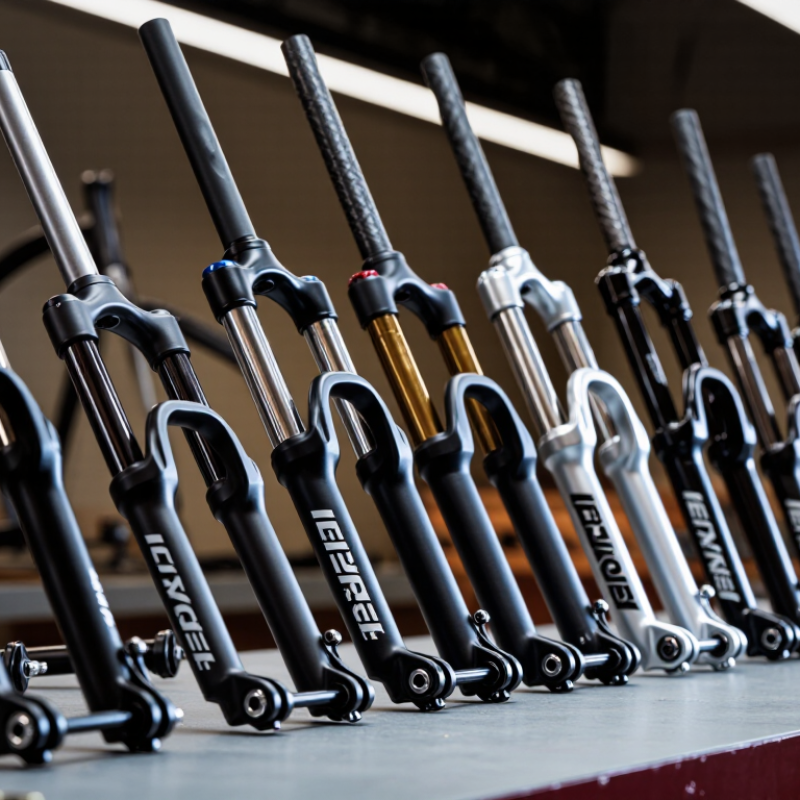
What Are the Best Bicycle Chopper Forks in 2026?

How Fork Rake, Trail, and Axle-to-Crown Length Shape Chopper Handling

Choosing the best bicycle chopper fork in 2026 starts with geometry, not appearance. Rake, also called fork offset, is the distance between the steering axis and the front axle. More offset usually reduces trail, which can make steering feel quicker. Less offset tends to increase trail and create steadier, slower steering. Neither setting is automatically better. Tire size and head angle also affect the result, so one measurement cannot tell the whole story.

Trail is the ground distance between where the steering axis meets the road and the tire’s contact patch. Too little can feel nervous over cracked pavement; too much may make tight turns feel heavy. Axle-to-crown length matters just as much. A longer fork typically raises the front of a compatible frame, slackens its head angle, and changes trail. It can also alter bottom-bracket height and weight balance. Measure the current fork before comparing replacements. Small geometry changes add up.

A practical check is to compare the complete front-end dimensions, then test steering at walking speed in a clear area. Notice whether the wheel tracks straight and whether slow turns demand excessive effort. Also check tire clearance, brake compatibility, and the frame’s approved fork-length limits. Long chopper forks can flex more under braking, especially with a heavy front end. The look may be right; the handling may not be. There is no tidy formula that replaces a careful fit check, and even a promising setup can feel awkward on rough streets.
Which 20-, 24-, and 26-Inch Wheel Sizes Match Common Chopper Forks

For a 20-inch chopper, match the fork to a 20-inch wheel, not just the frame’s advertised size. Small wheels can leave limited room for a wide tire or fender. Check clearance at the crown and between the fork legs, with the tire fully inflated. A few millimeters matter.

A 24-inch setup often suits a longer, low-slung frame, but the fork still needs the correct axle width, dropout shape, and brake mounts. Measure the steerer tube before buying; its diameter and length must fit the frame and headset. Easy to overlook. Wheel labels are nominal, so tire height can change the actual fit and ride height.

For 26-inch wheels, choose a fork rated for that wheel and tire combination. Confirm the fork’s axle-to-crown length and rake, since both affect steering and frame stance. Changing these dimensions can make a familiar bike feel surprisingly different. Even careful builders can mistake wheel diameter for full compatibility. Compare the fork maker’s fit specifications with your rim, tire, brake, and frame measurements, then check that the assembled wheel spins freely without rubbing.

What Are the Best Bicycle Chopper Forks in 2026? — Which 20-, 24-, and 26-Inch Wheel Sizes Match Common Chopper Forks

Nominal Wheel Size Common Bead Seat Diameter (BSD) Common Tire Widths Typical Chopper Fork Match Fit Checks Before Buying
20 inch 406 mm is common; some 20-inch road-style wheels use 451 mm About 1.75–2.4 inches for many standard-width setups; wider tires are available on some frames and forks A suitable 20-inch rigid or springer-style fork can work for compact chopper builds. Match the fork to the wheel’s actual BSD and tire width rather than the nominal size alone. Confirm tire and rim BSD, tire clearance, axle type and width, steerer dimensions, and brake compatibility. A 406 mm wheel will not fit a fork designed for a 451 mm wheel.
24 inch 507 mm is common; other BSDs also exist under the 24-inch label About 1.75–3.0 inches on many setups; wider options depend on the rim, frame, and fork A 24-inch chopper fork is a common choice for mid-sized builds. Rigid and springer-style forks are both used, but their axle-to-crown length and steering geometry can differ substantially. Check the wheel’s BSD, the inflated tire’s measured width and height, fork clearance, brake reach or disc mounts, axle fit, and steerer compatibility.
26 inch 559 mm is common; some 26-inch road-style wheels use 571 mm About 1.5–2.3 inches for many standard setups; fat-bike tires are often around 3.5–4.0 inches and need a purpose-built fork A 26-inch fork is suitable only when its design matches the wheel and tire. Standard-width and fat-tire chopper forks are not interchangeable unless the fork provides adequate clearance. Verify BSD, maximum tire width and height, rim width, axle spacing, brake system, steerer dimensions, and fork length. Do not assume every 26-inch wheel uses a 559 mm rim.

Fitment note: “20-inch,” “24-inch,” and “26-inch” are nominal labels, not complete compatibility specifications. Before choosing a chopper fork, check the wheel’s ETRTO/ISO size (including BSD), inflated tire dimensions, axle and steerer standards, brake setup, and the fork maker’s clearance and length measurements. Fork length and rake affect handling, so changing them can alter steering behavior.

How 1-Inch and 1⅛-Inch Steerer Standards Affect Fork Compatibility

A chopper fork can look right and still fail at the headset. The key measurement is the steerer tube’s outside diameter: 1 inch equals 25.4 mm, while 1⅛ inches equals 28.6 mm. These sizes are not interchangeable. A 1-inch frame needs a headset designed for that steerer; a larger opening does not make a smaller fork secure without the correct headset.

Check more than diameter. Measure the steerer length, identify whether it is threaded or threadless, and confirm the crown-race seat and headset type. Then verify axle spacing, brake mounts, and fork length. A long fork can raise the front end and alter steering feel. Tiny details matter. ISO 4210-6:2023 sets safety test methods for bicycle forks, but it is not a fitment chart. I would not treat a safety standard as proof that two parts fit together.

PeopleForBikes’ 2024 U.S. Bicycling Participation Report says 112 million Americans rode bicycles in 2023. That figure describes participation, not fork dimensions, but it reflects a varied fleet with many fit combinations. Before buying, compare the frame’s headset specifications with the fork’s measured steerer, rather than relying on a seller’s “universal” label. I still find that label too vague.

Bicycle Chopper Fork Steerer Standards: 1″ vs. 1⅛″

The nominal outside diameters are 25.4 mm for a 1-inch steerer and 28.575 mm for a 1⅛-inch steerer. These standards are not interchangeable by diameter alone: check the frame, headset, crown race, and whether the fork is threaded or threadless before choosing a replacement.

How Steel and Aluminum Forks Compare by Weight, Strength, and Maintenance

Steel chopper forks usually weigh more, especially when long blades use thick tubing. That extra mass can make the front end feel steadier, but it also makes lifting and maneuvering the bicycle harder. Aluminum can reduce weight, though a light fork is not automatically a better fork. Tube shape, wall thickness, crown design, and weld quality all affect strength.

Weight matters less than fit. A fork must match the frame, wheel size, brake setup, and intended riding loads. One detail is easy to miss. A long fork changes steering geometry, which can make slow turns feel vague or awkward. Steel often flexes more noticeably under load, while aluminum designs tend to feel stiffer. Neither material guarantees safe handling; construction and compatibility matter more than the label.

Maintenance differs, too. Inspect steel regularly for chipped paint, rust, and damage around welds or dropouts. Aluminum does not rust like steel, but cracks can be difficult to spot, especially near the crown. Look closely after a hard impact. Keep the fork clean, check fasteners to the maker’s specified torque, and replace any fork with visible cracking or bending. Repair options vary by alloy and damage, so guessing is a poor plan. I’d weigh a complete, correctly sized fork before comparing materials; advertised material alone tells only part of the story.

How ISO 4210-6 Fork Tests Evaluate Strength and Fatigue Resistance

What Are the Best Bicycle Chopper Forks in 2026?

A chopper fork’s length changes more than its appearance. It can increase leverage on the steerer and crown, so fatigue resistance matters alongside static strength. ISO 4210-6:2023, the international standard for bicycle frame and fork test methods, includes fork fatigue, impact, and bending tests. These methods examine repeated loading and sudden forces—not just whether a fork survives one heavy push.

No shortcuts here.

A useful test report should identify the fork configuration, test method, load conditions, and any damage or permanent deformation. Results from one fork design do not automatically apply to a longer or differently mounted chopper fork.

ISO testing also does not establish a universal “best” score; requirements and test conditions vary by bicycle category. That distinction is easy to miss.

When comparing forks, look for traceable test data that matches the actual length, steerer, and intended use. A standard pass is valuable evidence, but it cannot predict every real-world impact, installation error, or fatigue history. I would treat it as a strong screening tool, not a guarantee.