Best Mtb Front Suspension Options for Every Rider?
Choosing the right MTB front suspension can dramatically improve your ride. It's essential to understand your specific needs as a rider. Different terrains demand different suspension systems. Understanding how each option performs is crucial for maximizing comfort and control.
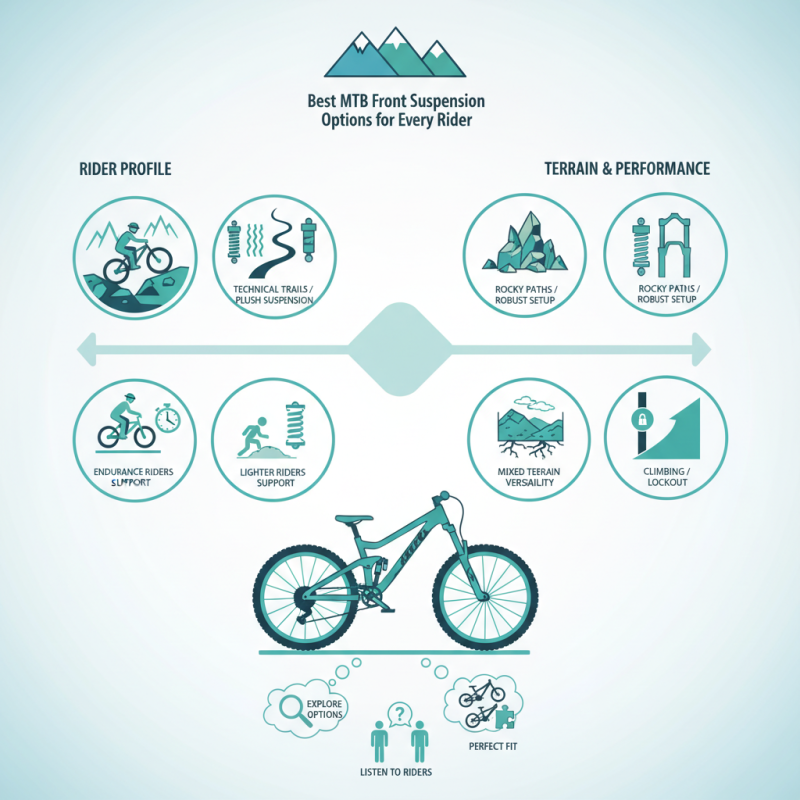
Each suspension type has its pros and cons. Some riders prefer plush suspensions for technical trails, while others seek efficiency for endurance rides. If you often ride on rocky paths, a robust setup is vital. Lighter riders might not need as much softening, yet they can feel every bump without proper support.
Reviewing your riding style can help clarify what works best. MTB front suspension should enhance your experience, not detract from it. Explore options, and listen to fellow riders. Their insights can shed light on choices you may not consider. Remember, the best suspension is the one that fits you and your bike perfectly.
Types of MTB Front Suspension: Choosing the Right Style for You
When selecting the right front suspension for mountain biking, it’s crucial to understand the different types available. Mountain bike (MTB) front suspensions come primarily in two styles: hardtail and full-suspension. Hardtail models have a suspension fork at the front, providing a simple and lightweight option. According to the International Mountain Bicycling Association (IMBA), more than 60% of new riders opt for hardtails due to their easier maintenance and affordability.
On the other hand, full-suspension bikes offer both front and rear suspension systems, which enhance comfort and control on rugged terrain. Research from the Bike Industry Association indicates that these bikes can significantly reduce fatigue on longer rides, making them suitable for more experienced riders seeking performance. However, they tend to be heavier and require more maintenance, which might dissuade casual bikers.
Riders should also consider their typical riding conditions. A report from the National Interscholastic Cycling Association (NICA) states that those frequently tackling technical trails might benefit from a full-suspension bike. However, riders in flatter regions may find that a hardtail suffices. Investing in the right suspension system depends on riding style, terrain, and personal preferences. Each option presents its upsides and drawbacks, making it essential to reflect on one’s biking habits and needs.
Best MTB Front Suspension Options for Every Rider
| Suspension Type |
Travel (inches) |
Ideal Riding Style |
Weight (lbs) |
Price Range |
| Rigid |
N/A |
Cross-country |
3-4 |
$200-$500 |
| Hardtail |
3-5 |
Trail/All-Mountain |
4-5 |
$500-$1500 |
| Full Suspension |
5-8 |
Enduro/Downhill |
5-6 |
$1500-$5000 |
| Dual Crown |
7-10 |
Freeride/DH |
6-7 |
$2000-$7000 |
Key Features to Consider in MTB Front Suspension Systems
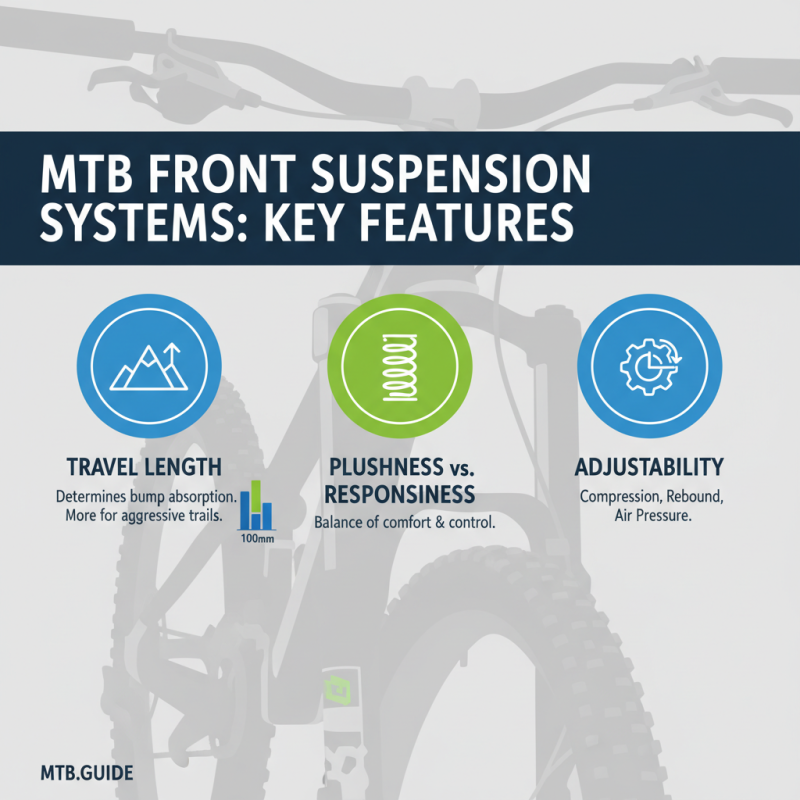
When choosing the right front suspension for mountain biking, several key features deserve careful consideration. Travel length is crucial; it determines how much bump absorption is possible. Riders often oscillate between a balance of plushness and responsiveness. A fork with around 100mm travel is versatile for many terrains. Yet, some may prefer more for aggressive trails.
Next, look at the suspension type. There are air and coil options. Air springs are generally lighter, which can enhance maneuverability. However, they may require more fine-tuning. Coil systems tend to offer a smoother ride in rough conditions but can weigh more. Think about your riding style. Some prefer a firmer ride, while others appreciate a softer suspension.
Additionally, consider adjustability. Some suspension systems allow custom tuning for personal preferences. They can enhance performance but may also lead to confusion for new riders. An efficient lockout feature is valuable for climbing, but it can be easy to forget to unlock it. This balance of performance and user experience is essential for enjoying rides to the fullest. Selecting the right front suspension enhances your ride and boosts your confidence on the trail.
Budget-Friendly MTB Front Suspension Options for Beginners
When starting out in mountain biking, a good front suspension can enhance your ride significantly. Many beginners often underestimate its importance.
A reliable front suspension absorbs shocks from rough terrains. This makes your rides smoother and more enjoyable.
Budget-friendly options are available that don’t compromise on quality. These suspensions offer decent travel and responsiveness. Look for models that provide adjustable settings. This allows you to tailor the performance to your weight and riding style. While some cheaper models might not perform as well, they can still offer valuable experience to new riders.
It's essential to seek advice from fellow riders or biking forums. Real feedback can guide your choices. You might find that a particular brand or type suits your needs better. Remember, trial and error is part of learning. Some suspensions may feel too stiff or too soft at first. Adjusting your settings will often help. Embrace these challenges as part of your biking journey.
High-Performance Front Suspension Choices for Advanced Riders
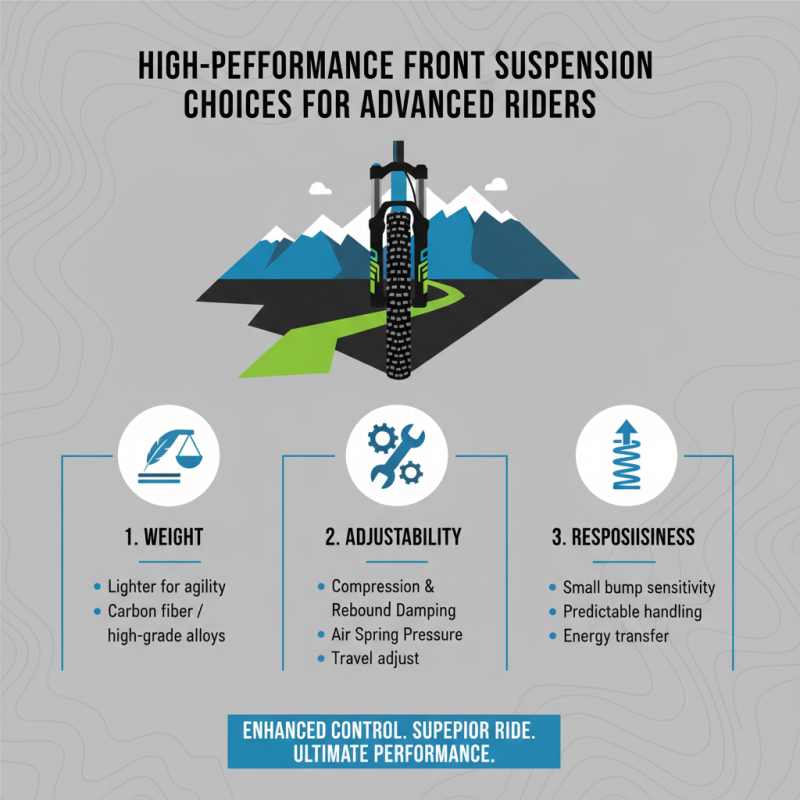
When it comes to mountain biking, advanced riders seek out high-performance front suspension options. A well-designed front suspension can drastically enhance ride quality. It absorbs shock, improves control, and enhances overall bike handling. Riders often prioritize weight, adjustability, and responsiveness in their suspension choice.
One effective tip is to consider the terrain you'll be riding. For rocky trails, look for wider travel and damping adjustments. These features help absorb rough impacts and maintain traction. On smoother trails, a firmer suspension setup can enhance pedaling efficiency. Each ride offers new lessons, so test different setups to find what suits your style.
Maintaining your suspension is key. Regularly check for air pressure and adjustments. Even small changes can lead to major differences in performance. If your ride feels off, investigate your setup. Sometimes, a simple re-tuning can make your bike feel brand new. An experienced rider knows that understanding your equipment is part of the journey.
Maintenance Tips for Prolonging the Life of Your MTB Front Suspension
MTB front suspension is crucial for a smooth ride. To ensure its longevity, regular maintenance is key. Start by checking the air pressure periodically. The right pressure can significantly impact performance and comfort. Make it a habit to inspect the seals for any signs of wear. Damaged seals can lead to leaks, reducing the effectiveness of the suspension.
Cleaning your suspension is equally important. Use a gentle brush to remove dirt and mud. Pay attention to the stanchions, as grime can affect their performance. Lubricate the seals to keep them functioning properly. A well-lubricated system will not only enhance performance but also prolong the life of your suspension.
Lastly, don’t neglect proper storage. Protect your bike from extreme temperatures and direct sunlight. Store it in a cool, dry place. Neglecting storage conditions can lead to wear and tear you might not notice immediately. Keep these maintenance tips in mind to enjoy a smoother ride for longer.