Top 10 Cycle Forks What to Consider When Buying?
When investing in a bike, selecting the right Cycle Fork is crucial. It significantly affects performance, safety, and comfort. The global bicycle market is anticipated to reach $61 billion by 2026, emphasizing the demand for quality components. Among these, forks play a vital role in ride quality and handling.
A suitable Cycle Fork enhances stability and responsiveness. Different designs cater to various terrains and riding styles. According to a recent industry report, over 30% of cyclists experience fork-related issues, underscoring the importance of careful selection. Many riders overlook this, leading to discomfort or reduced performance.
It's essential to weigh factors like material, weight, and intended use. Top-tier Cycle Forks can greatly influence a bike's overall efficiency. However, not every expensive fork guarantees quality. Understanding specifications and seeking expert reviews can be helpful. Choose wisely for a better cycling experience.
Key Factors to Consider When Choosing Cycle Forks
When choosing cycle forks, several key factors come into play. The material of the fork greatly influences weight and performance. Aluminum forks are lightweight and provide good stiffness, while carbon forks can absorb vibrations effectively. Research from the cycling industry indicates that forks made from high-grade materials offer a noticeable improvement in ride quality.
Another important aspect is the fork’s travel. This is the distance the suspension can compress, affecting how the bike reacts to bumps. Riders should match the fork travel to their riding style. For example, a mountain biker may need at least 120mm of travel for trails. Conversely, a commuter on paved roads might opt for a fork with less travel, usually around 40-50mm.
**Tip:** Always test ride a bike with the chosen forks before purchasing. This practical approach helps identify comfort and handling issues.
Weight distribution is another crucial factor to consider. A fork that is too heavy can hinder performance, especially in competitive settings. Reflections on fork geometry reveal that improper angles can lead to poor handling. Striking a balance between stability and responsiveness often requires careful selection.
**Tip:** Pay close attention to axle compatibility. Different fork standards can affect wheel installation and overall bike performance. Do your homework to avoid mismatches.
Top 10 Cycle Forks: Key Factors to Consider When Choosing
Types of Cycle Forks: Rigid, Suspension, and More
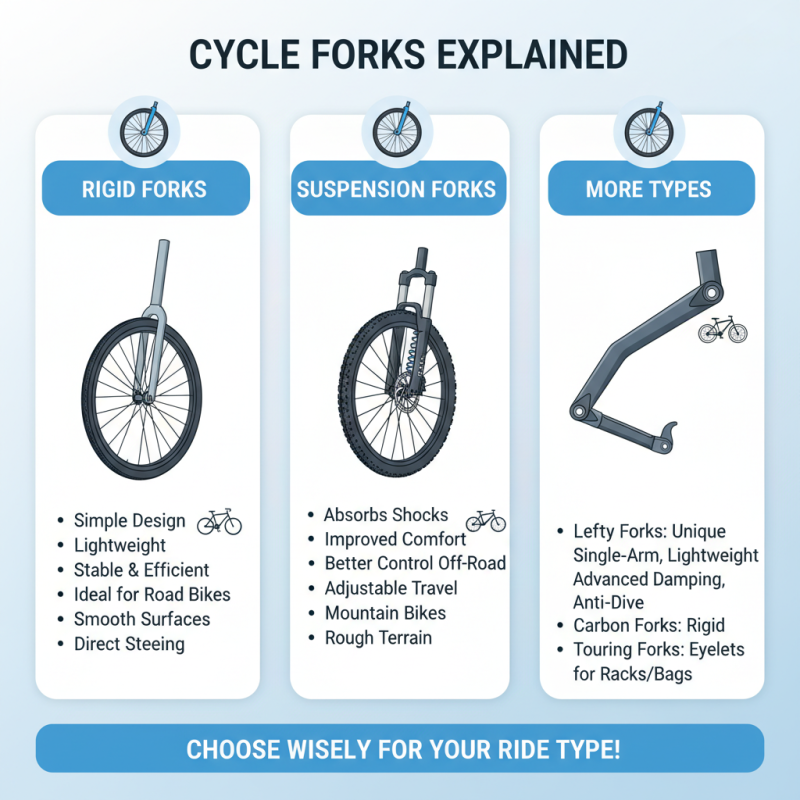
When choosing cycle forks, understanding the different types is crucial. Rigid forks are a simple design, providing stability and lightweight performance. They are ideal for road bikes, where precision and speed are priorities. Riders looking for control on smooth surfaces may find rigorous testing could improve their experience.
Suspension forks, on the other hand, offer more versatility. They absorb shocks, making rough terrains easier to handle. This type is popular among mountain bikers who frequently encounter obstacles. However, they can add extra weight, and their maintenance can be more demanding. Riders should consider whether the trade-off in weight is worth the enhanced comfort.
Then there's the option of hybrid forks. These combine elements of both rigid and suspension forks, adapting to a range of conditions. While they offer flexibility, they might fail to excel in extreme situations. Riders might find themselves reflecting on their specific needs before making a decision. Understanding how each type can affect performance is vital for a satisfying ride.
Material Choices for Cycle Forks: Aluminum, Carbon, and Steel
When considering cycle forks, material choice is crucial. Aluminum, carbon, and steel each come with distinct advantages and drawbacks. Aluminum is lightweight and stiff, offering quick responses and efficient power transfer. It’s a popular choice for racing bikes. However, it can be less forgiving on rough terrain, leading to potential discomfort.
Carbon fiber is another option. It’s incredibly strong and ultra-light, often favored for high-performance bikes. Carbon dampens vibrations well, providing a smoother ride. Yet, it can be expensive. Many riders worry about durability, especially when facing tough conditions.
Steel, known for its resilience, offers a different experience. It’s heavier, but its ability to absorb shock effectively makes it great for touring or off-road cycling. Riders frequently appreciate its longevity. A downside is that it can rust if not maintained properly.
**Tips:** When choosing, consider your riding style. Take time to test different materials on varied terrains. This will help you assess comfort versus performance. Research user reviews for insights on real-world durability.
Top 10 Cycle Forks: What to Consider When Buying?
| Fork Material |
Weight (grams) |
Stiffness Rating |
Price Range (USD) |
Durability |
| Aluminum |
1200 |
7/10 |
150-300 |
High |
| Carbon |
800 |
9/10 |
300-700 |
Moderate |
| Steel |
1500 |
6/10 |
100-200 |
Very High |
| Titanium |
1000 |
8/10 |
600-1000 |
Very High |
| Aluminum Alloys |
1100 |
7.5/10 |
200-400 |
High |
Understanding Fork Geometry: Axle Offset and Angle
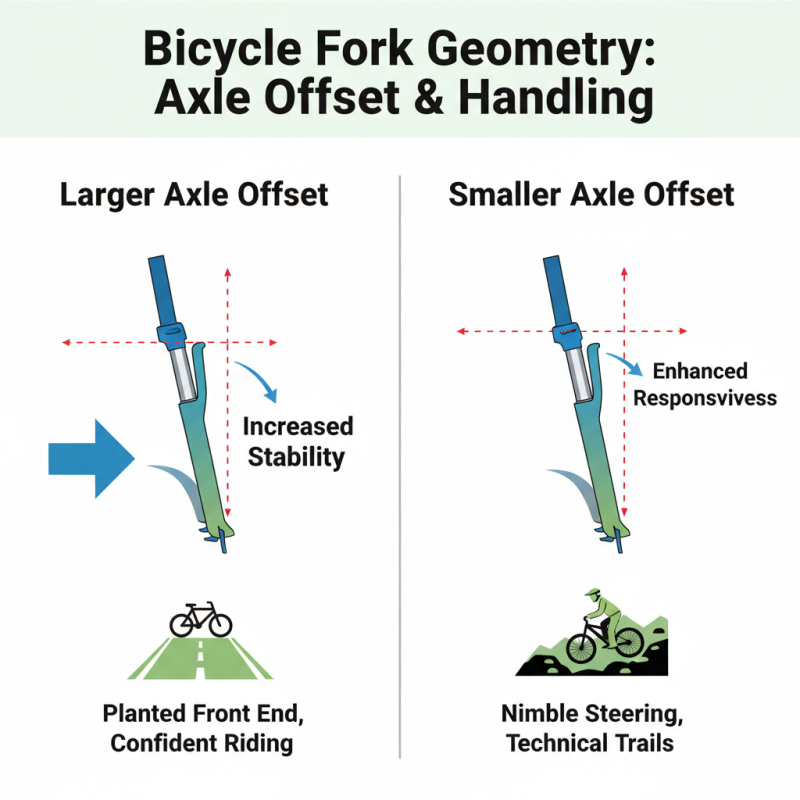
When selecting a bicycle fork, understanding fork geometry is crucial. Two key aspects to consider are axle offset and angle. The axle offset affects handling characteristics. A larger offset generally enhances stability. It can make the front end feel more planted during rides. Conversely, a smaller offset tends to increase responsiveness, allowing nimble steering for technical trails.
The angle of the fork also plays a significant role in performance. A slacker angle can enhance stability at high speeds. However, it may reduce maneuverability in tight corners. On the other hand, a steeper angle can improve agility but might compromise stability. Finding the right balance is essential. Riders must consider their style and the terrain they typically encounter.
Another point to reflect on is compatibility. Different bikes have unique requirements for fork geometry. Ensure that the chosen fork will fit properly. Mismatched geometry can lead to suboptimal performance. Riders might feel uncertain about the adjustments needed when changing forks. Prioritizing geometry allows for a more tailored riding experience. Balancing preferences and specifications is often challenging, but it is a necessary step.
Compatibility: Matching Forks with Your Bicycle Frame and Wheel Size
When selecting a cycle fork, compatibility is paramount. The right fork must match your bicycle frame and wheel size. A proper fit enhances performance and safety. According to industry data, approximately 40% of cyclists experience issues due to improper fork selection. This can lead to handling problems and potential accidents.
Your bicycle's geometry plays a critical role. A fork's axle-to-crown height impacts ride quality. It also affects the bike's steering characteristics. A mismatch can create a less responsive ride. For example, if the fork height is too tall, it may lead to a slack head angle. Conversely, a fork that’s too short can create a steep head angle, affecting stability.
Another factor is the wheel size. Common sizes include 26", 27.5", and 29". Each size has forks designed specifically for it. It’s essential to check the clearance for the tires, especially for wider models. Reports indicate that around 30% of cyclists overlook this detail. This oversight can hinder performance, especially on rough terrain.
Compatibility isn’t just a checkbox; it directly influences your riding experience.