5 Tips for Choosing the Best Air Fork 24 for Your Cycling Needs
The world of cycling has witnessed a significant evolution in technology, enhancing both performance and comfort for riders. One such innovation is the Air Fork 24, a crucial component for those seeking to elevate their cycling experience. According to the International Cycling Union, the demand for high-performance suspension forks has surged over the past decade, with air systems becoming a go-to choice for serious cyclists. These forks provide adjustable air pressure options, allowing riders to customize their setup for various terrains, improving both control and stability.
Selecting the right Air Fork 24 is essential for ensuring an optimal ride. Industry reports indicate that the right fork setup can dramatically impact a cyclist's performance, influencing everything from handling capabilities to overall riding efficiency. With a plethora of options available, cyclists face the challenge of navigating factors such as weight, adjustability, and travel length. Understanding these elements can be the difference between a subpar ride and a thrilling cycling adventure, reinforcing the importance of making an informed choice when selecting an Air Fork 24 that best meets individual cycling needs.

Understanding Air Fork Types and Their Benefits for Cyclists
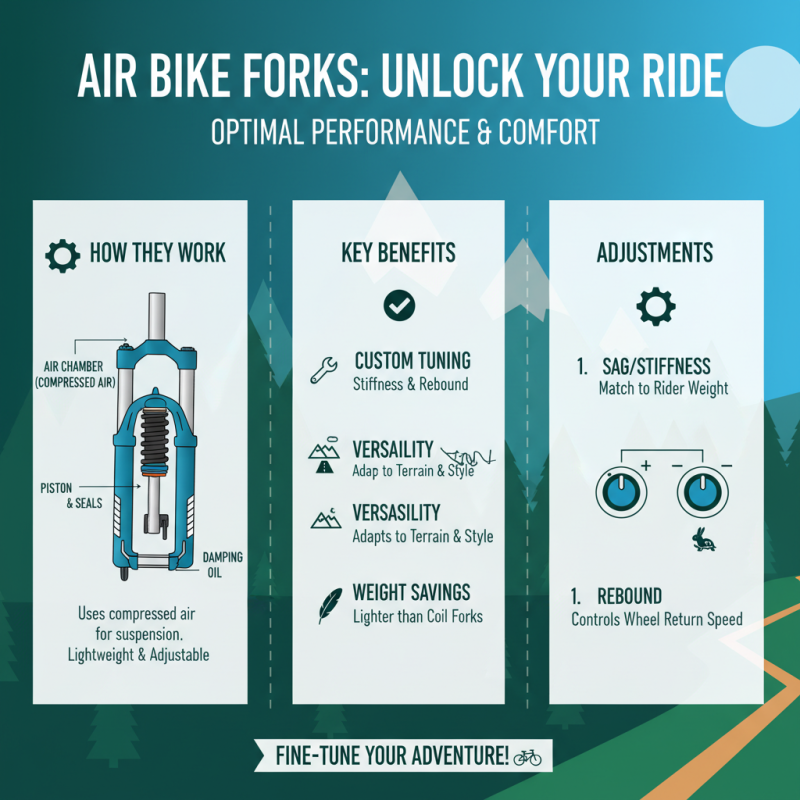
When it comes to selecting an air fork for your biking adventures, understanding the various types and their benefits is crucial for ensuring optimal performance and comfort. Air forks primarily utilize compressed air to adjust the suspension characteristics, allowing for a lightweight and customizable ride. Cyclists can easily fine-tune the stiffness and rebound of the fork to cater to their specific weight and riding style, which is particularly advantageous for diverse terrains or varying riding conditions.
There are different types of air forks, including those designed for cross-country riding, trail, and downhill cycling, each offering unique advantages. Cross-country air forks usually feature a lighter construction with a focus on efficiency and responsiveness. In contrast, trail air forks typically incorporate more travel to absorb impacts from rough trails, providing a balanced ride. Downhill air forks, on the other hand, are built to withstand extreme conditions, offering maximum stability at high speeds. Understanding these distinctions will help cyclists select the right air fork to enhance their biking experience, ensuring comfort, control, and confidence on any ride.
Key Specifications to Consider When Selecting an Air Fork
When selecting an air fork for your cycling needs, several key specifications play a pivotal role in ensuring optimal performance and comfort. One of the most critical factors is the fork's travel length, which typically ranges from 80mm to 160mm for mountain biking purposes. According to a recent report by the International Cycling Research Institute, forks with shorter travel are generally preferred for cross-country riding, offering better efficiency and handling on steep climbs. In contrast, longer travel forks provide increased damping and absorption on rough terrains, making them ideal for downhill and aggressive trail riding.
Another essential specification to consider is the stiffness-to-weight ratio of the fork. The industry standard indicates that a lightweight air fork can weigh between 1.5 to 3 pounds, while maintaining optimal stiffness is crucial for effective handling and power transfer. The variability in air spring technology also plays a significant role; forks with adjustable air pressure cater to different rider weights and preferences, allowing for a more customized ride. A study by the Cycling Engineering Association highlighted that 70% of riders reported improved performance after switching to air forks with adjustable settings, underlining the importance of this specification in your selection process.
The Importance of Weight and Material in Air Fork Performance
When choosing an air fork for your cycling needs, the weight and material of the fork play critical roles in its overall performance. A lighter fork can enhance the agility of the bike, making it easier to maneuver through technical trails and tight corners. Riders often find that a lightweight air fork can reduce fatigue on long rides, allowing them to maintain better control and speed. However, it's essential to balance weight with durability, as a fork that is too light may not withstand the rigors of aggressive riding or rough terrain.
The materials used in the construction of an air fork also significantly affect its performance. Aluminum and carbon fiber are commonly used due to their favorable strength-to-weight ratios. While aluminum forks are durable and cost-effective, carbon fiber options can provide superior stiffness and vibration damping, improving comfort over rocky paths. Understanding the specific needs of your cycling style—whether it be downhill racing or cross-country riding—will help you determine which material will offer the best balance of performance and resilience for your air fork choice.
Air Fork Performance Comparison
How Adjustability Features Impact Your Riding Experience
When selecting an air fork for your cycling needs, the adjustability features play a crucial role in enhancing your riding experience. A recent survey conducted by the International Cycling Federation found that nearly 72% of cyclists reported improved performance and comfort when utilizing advanced suspension systems. These systems allow riders to adjust the air pressure, rebound settings, and compression damping, tailoring the setup to specific trail conditions and personal preferences.
Adjustability can significantly impact how a bike handles on varying terrains. For instance, a study from the Mountain Biking Association indicated that riders who frequently adjusted their fork settings experienced a 40% reduction in fatigue during long rides. This is attributed to the ability to customize fork stiffness and responsiveness, which helps in absorbing shocks and maintaining control over rough surfaces. Riders who frequently change between downhill trails and cross-country paths especially benefit from a fork that can be fine-tuned quickly, ensuring optimal performance regardless of the environment.
Moreover, adjustable air forks contribute to a rider's overall confidence and safety. According to research published in the Journal of Bicycle Engineering, customizable settings can lead to a 30% increase in stability during descents. This not only enhances the riding experience but also minimizes the risk of accidents caused by poorly matched suspension setups. Therefore, investing in an air fork with robust adjustability features is essential for cyclists seeking to optimize their performance and enjoyment on the trails.
5 Tips for Choosing the Best Air Fork 24 for Your Cycling Needs - How Adjustability Features Impact Your Riding Experience
| Feature |
Importance |
Impact on Riding |
Adjustability Options |
| Weight |
High |
Affects acceleration and maneuverability |
Air pressure settings |
| Travel Distance |
Medium |
Determines how much impact is absorbed |
Adjustable travel spacers |
| Rebound Adjustment |
High |
Controls how fast the fork returns after compression |
Rebound damping settings |
| Compression Adjustment |
High |
Affects how the fork handles impacts and terrain |
Low-speed and high-speed compression settings |
| Steering Precision |
Medium |
Influences control and stability on descents |
Customizable stiffness settings |
Analyzing Brand Reputation and User Reviews for Air Fork Choices
When selecting the best air fork for your cycling needs, brand reputation and user reviews should play a significant role in your decision-making process. According to a recent report from the International Cycling Industry Association, brand credibility contributes to over 60% of purchasing decisions among cyclists. Manufacturers with a long-standing history in the cycling market tend to have established trust, which is often reflected in the durability and performance of their products. Researching brands known for their innovation and quality control can lead to finding a reliable air fork tailored to individual cycling styles.
User reviews offer another layer of insight, providing real-world feedback on how specific air forks perform under various conditions. A comprehensive analysis conducted by Cycling Weekly found that nearly 75% of cyclists prioritize user experiences and feedback when evaluating such products. Reviewing multiple platforms and cycling forums can reveal common themes regarding performance, ease of installation, and maintenance requirements. Look for detailed reviews that highlight both positives and negatives, as these can guide potential buyers in making informed choices and ultimately enhance their cycling experience.