10 Essential Tips for Choosing Mtb Front Suspension for Better Ride Quality?
Choosing the right MTB front suspension can greatly enhance your ride quality. A well-selected suspension helps absorb shocks and improves control on rugged terrains. Different styles and weights can affect your overall performance, making this decision crucial for your mountain biking experience.
Many riders overlook certain features. Not every suspension system suits every rider. A stiff spring may be ideal for some while others might prefer a softer setup. Understanding how these components interact with your riding style is essential. Taking the time to evaluate various options can be the difference between a wild ride and a smooth journey.
Don’t forget to consider adjustment features as well. A flexible suspension allows you to customize your experience based on the trail conditions. It’s also worth noting that not all recommended suspensions fit every bike frame. Reflecting on your needs and preferences will guide you toward the right choice in MTB front suspension.
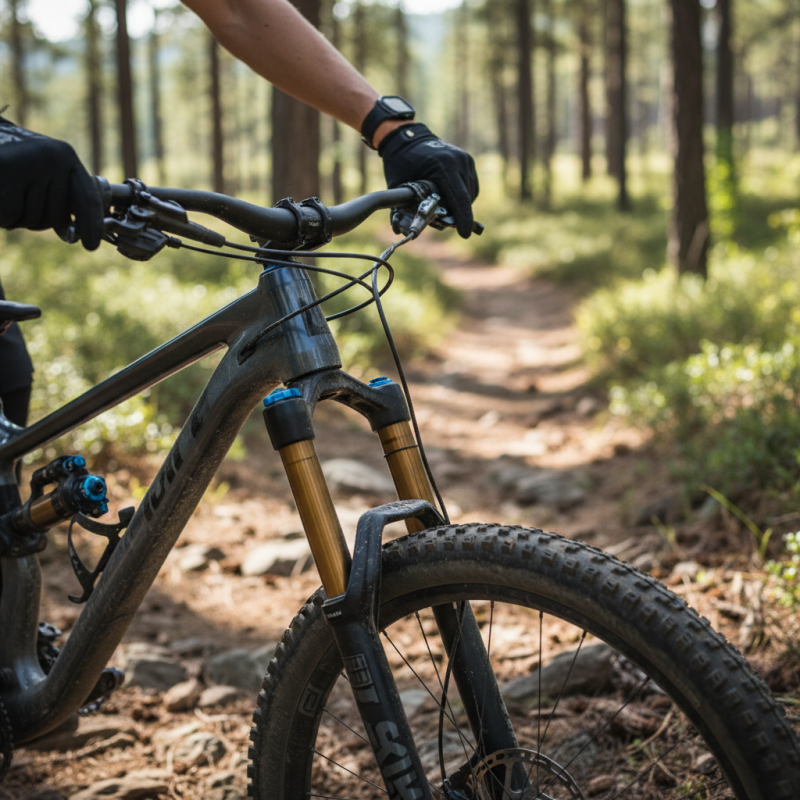
Understanding Different Types of MTB Front Suspension Systems
When it comes to mountain biking, the front suspension plays a crucial role. Different types provide varied experiences. Common options include hardtail and full-suspension systems. Hardtails are lighter. They perform well on smooth trails. However, they can be punishing on rough terrain. A full-suspension system can absorb more bumps, enhancing comfort during long rides. It's vital to consider the type of riding you prefer.
Exploring coil and air springs is important. Coil springs offer a plush feel but can be heavier. Air springs are adjustable and versatile. They are popular for their lightweight nature. However, their performance may vary in extreme conditions. Riders should reflect on their local trails and chosen riding style. Sometimes, the decision feels overwhelming. Testing different setups can help narrow down preferences. A poorly chosen setup may detract from the riding experience.
Don’t overlook the importance of travel. Travel refers to how much the suspension compresses. More travel means better absorption of shocks, but it can affect handling. A bike with too much travel may feel sluggish on climbs. Balancing travel with your riding style is key. Also, consider maintenance needs. Simplicity can offer peace of mind for regular riders. Choosing a suspension system requires thoughtful consideration.
10 Essential Tips for Choosing MTB Front Suspension for Better Ride Quality
| Tip Number |
Tip Description |
Suspension Type |
Key Features |
| 1 |
Determine your riding style |
Hardtail |
Lightweight, efficient on climbs |
| 2 |
Consider travel length |
Full Suspension |
Improved shock absorption on rough terrain |
| 3 |
Look at weight distribution |
Dual-Crown Forks |
Better stability and control |
| 4 |
Evaluate damping options |
Air Suspension |
Customizable pressure for different riders |
| 5 |
Test ride different suspensions |
Spring Suspension |
Consistent feel, reliable under load |
| 6 |
Consider the terrain you’ll ride |
Downhill Suspension |
Built for high-speed descents |
| 7 |
Look for adjustable options |
Progressive Suspension |
Offers variable resistance depending on stroke |
| 8 |
Examine maintenance needs |
Sealed Cartridge |
Less frequent servicing required |
| 9 |
Check compatibility with your bike |
Boost Spacing |
Improved stiffness for wider tires |
| 10 |
Read user reviews and feedback |
Custom Suspension Systems |
Tailored to specific user needs |
Key Features to Consider for Optimizing Ride Quality
Choosing the right front suspension for your mountain bike can significantly impact ride quality. One crucial feature to consider is the suspension travel. Generally, longer travel provides better absorption of bumps and rough terrain. However, it may also affect bike handling. A balance is essential to maintain control while enjoying a smooth ride.
Another vital aspect is the suspension’s adjustability. Many forks allow you to tweak settings for compression and rebound. This customization can enhance performance but may require some trial and error. It's not uncommon to feel unsure about the perfect setup. Keep a journal of your adjustments and their effects.
Weight plays a role too. Lighter forks can improve your climb but might sacrifice durability. Think about your riding style. If you often tackle rugged trails, prioritize sturdiness over weight. Don't be afraid to experiment. Each ride is a chance to reflect and refine your choice for the best experience.
Impact of Suspension Travel on Performance and Comfort
When it comes to mountain biking, suspension travel plays a crucial role. The distance a fork can compress affects everything from handling to comfort. A longer travel often gives a bike a smoother ride. It absorbs impacts from rough terrain, making climbs and descents easier.
However, too much travel can be a double-edged sword. Excessive travel may result in a sluggish response. This can make technical trails feel challenging. Additionally, riders must consider their weight and riding style. A heavier rider may require different settings than a lighter one. Finding that balance can be perplexing. Riders should experiment with different setups to find what feels right.
Tuning suspension travel isn't just about comfort. It can significantly change performance. Think about the terrain you ride most. If it's rocky or rooty, more travel is beneficial. But if you prefer smoother trails, less might be better. Ultimately, understanding personal preferences takes time. Adjustments should be made based on real-world experiences.
Impact of Suspension Travel on Performance and Comfort
This chart illustrates the impact of suspension travel on ride quality. As the suspension travel increases, the ride quality score improves, indicating better performance and comfort for mountain biking. Optimal suspension travel enhances the overall experience on rugged terrains.
Adjustability Options: Fine-Tuning Your Suspension Setup
When selecting MTB front suspension, adjustability options play a crucial role in ride quality. Customizing your suspension is essential for peak performance. A recent industry report revealed that bikes with adjustable suspension systems can reduce impact by up to 40%. This can drastically enhance ride comfort and control, especially on rugged trails.
Different riders have unique preferences. Some may prefer a softer setup, while others opt for a firmer feel. The ability to fine-tune your suspension can greatly influence handling. For example, compression and rebound settings can be adjusted based on terrain conditions. Riders often overlook this aspect, resulting in suboptimal performance. Many riders ride with a factory setting, which might not suit their style or the specific demands of the trail.
Beyond terrain, rider weight also plays a role. Heavier riders may require stiffer settings. Conversely, lighter riders might benefit from more sag. Finding that balance is vital. An imperfect setup can lead to excessive bottoming out or insufficient grip. Adjustability allows for experimentation, leading to a more personalized and enjoyable ride. Proper setup may take time but is worth the effort for optimal performance.