What is a Dual Crown Fork and How Does It Work?
The Dual Crown Fork is an essential component for many high-performance bicycles, particularly in mountain biking. It offers stability and strength through its unique design, which features two crowns instead of one. This design allows for better weight distribution and improved steering precision, making it a favorite among competitive riders. According to a recent report by Cycling Industry Analyst, around 30% of professional mountain bikers prefer using a Dual Crown Fork for its superior handling capabilities.
Expert cyclist and engineer Dr. Emily Parker noted, “The Dual Crown Fork changes the way we experience downhill racing.” Her insight emphasizes the importance of this technology in enhancing rider safety and performance. It does, however, require a learning curve for new users. Understanding how to balance these forks can be tricky, even for seasoned riders. Moreover, their weight may pose challenges for those transitioning from standard forks.
In an industry that constantly evolves, the Dual Crown Fork reflects the push for innovation. While they provide remarkable advantages, they also present new complexities. The right fork can amplify your riding experience, but the wrong choice can lead to frustration. Adapting to this technology is not always easy. Careful consideration is necessary for those looking to maximize their biking potential.
What Is a Dual Crown Fork?
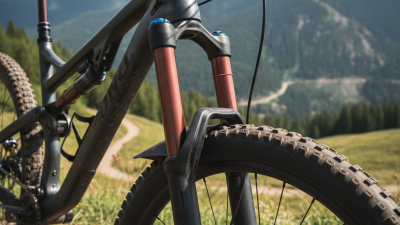
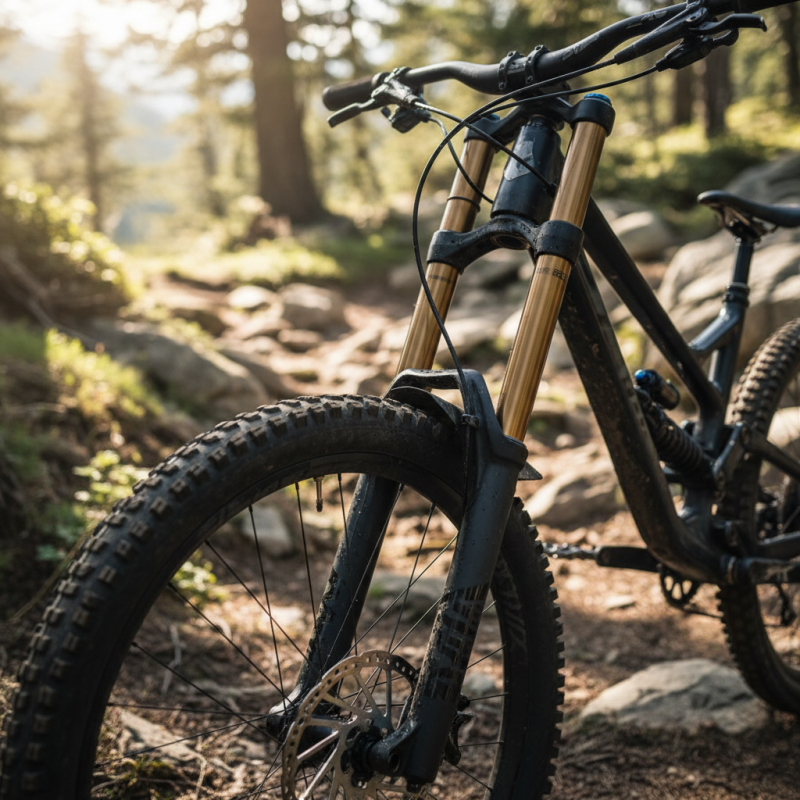
A dual crown fork is a type of suspension fork commonly found on mountain bikes. Unlike traditional single-crown forks, the dual crown design features two distinct crowns that secure the fork to the bike frame. This configuration enhances structural integrity and provides greater stiffness. Riders benefit from improved steering precision and increased control over challenging terrain.
The dual crown fork has unique mechanics. It generally houses two stanchions, which slide into the upper fork sections. This setup allows for better absorption of shocks and impacts. The design also typically accommodates larger travel ranges than single-crown forks. However, the added weight can be a drawback. Riders often need to balance the benefits of stability and performance against the extra weight they carry uphill.
Riders must also consider the fork's maintenance. Keeping the seals lubricated and checking for wear is crucial for optimal function. This often gets overlooked. Minor adjustments can significantly improve performance. Riders new to dual crown forks may feel overwhelmed by these responsibilities. Understanding how to adjust and maintain the fork is part of the experience that brings growth and improvement.
What is a Dual Crown Fork and How Does It Work?
| Feature |
Description |
Benefits |
| Design |
A dual crown fork features two crowns and is typically found on high-performance mountain bikes. |
Provides improved rigidity and a larger travel range. |
| Functionality |
Dual crown forks allow for better weight distribution and control during descents. |
Enhances stability and minimizes front-end dive. |
| Weight |
Generally heavier than single crown forks due to extra materials. |
Provides better suspension support and durability. |
| Intended Use |
Designed for downhill and aggressive riding styles. |
Optimal for tackling rugged terrains and obstacles. |
| Adjustability |
Many models include adjustable preload and damping settings. |
Allows riders to fine-tune performance based on riding conditions. |
Key Components of a Dual Crown Fork
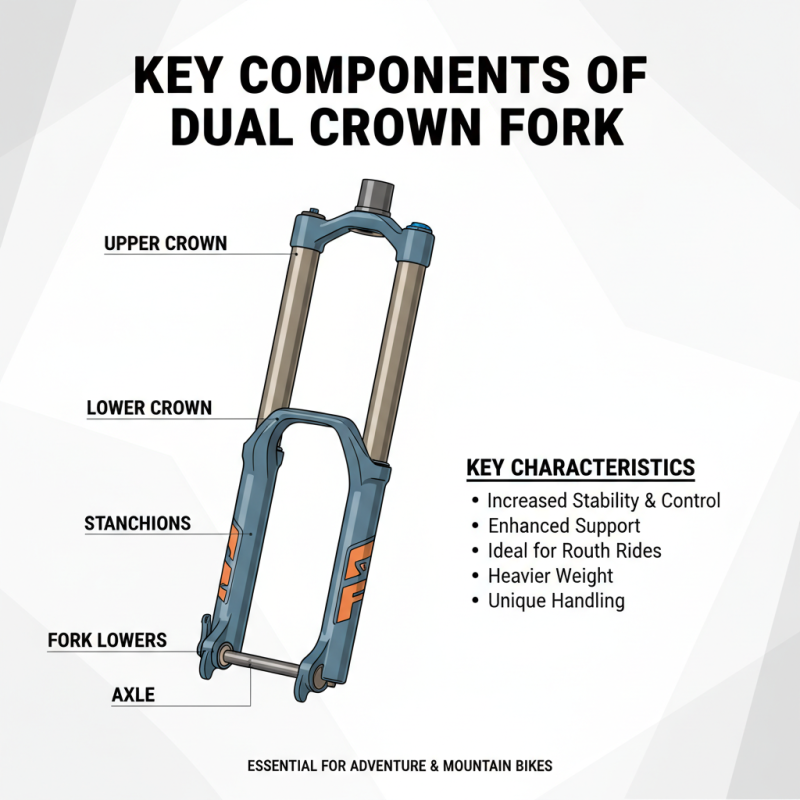
A dual crown fork is an essential component for many adventure bikes and mountain bikes. It features two crowns on the fork legs, providing unique handling characteristics. The design significantly enhances stability and control, especially during rough rides. The dual crown design can offer increased support. However, it may also feel heavier for some riders. This weight can influence how the bike maneuvers on technical terrain.
The key components of a dual crown fork include the upper and lower crowns, fork legs, and stanchions. The upper crown connects the fork to the handlebars, while the lower crown supports the fork legs. Stanchions slide within the fork legs, allowing for movement. All these parts work together to absorb shocks and provide a smooth ride. The materials used can vary, affecting performance. Riders may need to experiment with different setups to find the best balance for their style.
Another important aspect is adjustability. Some dual crown forks come with adjustable settings for rebound and compression. This customization allows riders to fine-tune their ride for different conditions. However, setting up a fork can be complex. Riders may need time and patience to achieve the desired feel and performance. Understanding the interplay of these components can greatly improve riding experience. This knowledge helps make informed choices about maintenance and upgrades.
How Does a Dual Crown Fork Function?
A dual crown fork is a unique type of bicycle suspension fork designed to enhance performance and stability. It features two crown components, which are connected to both the left and right legs of the fork. This design effectively distributes weight and absorbs shocks, leading to improved handling, especially on rugged terrains.
How does a dual crown fork function? When you ride over bumps, the fork compresses to absorb the impact. The dual crowns help maintain alignment, ensuring that both legs move smoothly together. This helps in maintaining control during aggressive maneuvers like jumps or tight turns. It allows the rider to feel more connected to the bike, enhancing overall confidence while tackling challenging trails.
**Tips:** Always inspect the fork before riding. Look for any signs of wear and tear. Regular maintenance can extend its lifespan. Also, consider your riding style. A dual crown fork may not be suitable for all types of biking. Knowledge of your needs is crucial. Having the right fork can significantly affect your riding experience.
Performance Comparison of Dual Crown Forks vs. Single Crown Forks
Benefits of Using a Dual Crown Fork
A dual crown fork is a unique component often found on high-performance bicycles, particularly mountain bikes. It employs two crowns to secure the fork's stanchions, providing extra stability. This design aids in maintaining alignment, making it ideal for rough terrains and aggressive riding styles.
Using a dual crown fork offers numerous benefits. One significant advantage is enhanced stiffness. The two-crown system distributes forces evenly, leading to better responsiveness during high-speed rides. Riders will notice improved control, especially on steep descents. Additionally, the increased stability can help in navigating technical trails with confidence.
Tips: When considering a dual crown fork, think about your riding style. If you're tackling challenging trails, this fork can be a game-changer. However, be aware of its weight; it may add bulk to your bike. Regular maintenance is crucial too, as the added complexity can be a downside. Keep an eye on wear and tear to ensure your fork continues to perform optimally.
Applications of Dual Crown Forks in Cycling and Other Sports
Dual crown forks have become an essential component in various cycling disciplines and other sports due to their unique design. These forks offer increased stiffness and stability, crucial for riders who tackle rough terrains. Mountain biking and downhill racing frequently use dual crown forks. They help to absorb shocks during jumps and descents, ensuring better control on challenging trails.
In addition to cycling, dual crown forks find applications in sports like freestyle skiing and motocross. In freestyle skiing, they provide necessary support for aerial tricks and landings. Riders appreciate the enhanced balance and control these forks deliver. Similarly, in motocross, the durability of dual crown forks allows riders to navigate difficult tracks with confidence. Yet, integrating these forks requires careful consideration of weight and maneuverability.
While they offer many benefits, dual crown forks can also present challenges. For instance, their heavier structure may impact overall bike performance. Riders must balance stiffness and weight to suit their style. Choosing the right setup often involves trial and error, making the journey both a challenge and a learning experience. Understanding these aspects can enhance performance in diverse sporting environments.