How to Choose the Right Fork Carbon for Your Bike?
Choosing the right Fork Carbon for your bike is crucial. The right fork can greatly influence your riding experience. Various factors come into play. Understanding these factors helps you make an informed decision.
Fork Carbon materials are lightweight and strong, making them a popular choice among cyclists. They reduce the overall weight of your bike. Yet, not every carbon fork suits every bike type. Some might need a stiffer fork for racing, while others may prefer a more forgiving design for comfort.
Not all environments are the same. Some forks perform better on rugged trails, while others shine on smooth roads. Take time to evaluate your riding style. Consider the terrain you usually ride on. Reflect on your priorities: speed, comfort, or weight. Making the right choice in Fork Carbon can improve your cycling journey, leading to a more enjoyable experience.
Understanding Different Types of Carbon Forks for Bicycles
Choosing the right carbon fork for your bike involves understanding key types available in the market. Carbon forks are popular due to their light weight and ability to absorb shocks. Generally, there are two main types: monocoque and bonded forks.
Monocoque forks are made from one continuous piece of carbon. This design allows for excellent strength and reduced weight. However, if you hit a rock hard, it might crack unexpectedly. Bonded forks, on the other hand, are constructed from multiple pieces. They can be repaired easier, yet they may weigh slightly more. Each design has its own advantages and disadvantages.
Consider your riding style when selecting a fork. If you enjoy aggressive terrain, opt for a robust design. For everyday commuting, a lighter fork might suffice. Don’t forget to check the fork's compatibility with your bike frame. This can often lead to disappointment. Ultimately, understanding these distinctions will guide your choice.
Key Factors to Consider When Choosing a Carbon Fork
Choosing the right carbon fork is crucial for enhancing your bike's performance. Key factors include weight, stiffness, and compatibility. A lightweight carbon fork can significantly reduce overall bike weight. According to industry reports, high-end carbon forks typically weigh between 300 to 500 grams. This weight reduction can improve speed and agility.
Stiffness is another critical aspect. A fork with higher stiffness offers better steering precision. Studies show that stiffness-to-weight ratios can greatly affect ride quality. Many cyclists prefer a stiffness rating around 50 N/mm for optimal performance. However, excessive stiffness can lead to discomfort on rough terrain. Striking the right balance is essential.
Compatibility with your bike frame and wheel size should not be overlooked. It’s vital to ensure the fork fits your bike’s geometry. A poorly fitting fork can compromise handling and safety. Research indicates that about 10% of bike enthusiasts face compatibility issues when upgrading. Always take the time to verify sizing and specifications. This attention to detail can save future headaches and enhance your riding experience.
How to Choose the Right Carbon Fork for Your Bike?
Evaluating the Compatibility of a Carbon Fork with Your Bike
When choosing a carbon fork for your bike, compatibility is key. You will need to consider your bike’s frame geometry carefully. A fork that fits smoothly into your bike design will optimize performance. A misfit can lead to unsafe riding experiences. The key dimensions to check are the steerer tube length and diameter.
Also, wheel size matters significantly. A fork meant for 29-inch wheels will not work well with a 26-inch bike. This disconnect can lead to balance issues. Ensure that your new fork matches the wheel specifications. Don’t overlook the axle type as well. Quick-release and thru-axle designs are not interchangeable.
Finally, consider the fork's rake and offset. These measurements influence handling and stability. A wrong choice may affect ride comfort. Stay clear of making assumptions based on general trends. Always test compatibility with your bike by consulting detailed specs. Reflect on your riding style to find a truly fitting fork. Small details can make a big difference in your biking experience.
How to Choose the Right Fork Carbon for Your Bike? - Evaluating the Compatibility of a Carbon Fork with Your Bike
| Dimension |
Description |
Compatibility Criteria |
Recommended Fork Size |
| Axle Type |
Type of axle used to secure the wheel |
Must match the frame’s fork requirements |
Thru-axle or Quick-release |
| Steerer Tube Diameter |
Diameter of the tube that connects the fork to the bike |
Must be compatible with the headset and frame |
1", 1-1/8", or Tapered |
| Rake/Offset |
The distance the front axle is offset from the steering axis |
Impacts handling and stability |
Usually between 40mm to 60mm |
| Weight |
Total weight of the fork |
Consider the overall bike weight goals |
Lightweight options preferred under 500g |
| Travel |
The distance the fork can compress |
Must match intended usage (e.g., road, mountain) |
Around 100-150mm for MTB |
Analyzing Weight, Stiffness, and Ride Quality in Carbon Forks
When selecting a carbon fork for your bike, focus on weight, stiffness, and ride quality. Weight is crucial for performance. A lighter fork enhances acceleration and climbing efficiency. However, extreme lightness can compromise durability. Find the right balance. A fork that feels feather-light might not always last the distance.
Stiffness plays a significant role in how your bike handles. A stiffer fork improves steering precision and power transfer. This can elevate your riding experience. Yet, a fork that's too stiff can create a harsh ride. Comfort is key, especially on long journeys. Remember, stiffness should enhance, not hinder, your ride.
Ride quality can differ greatly among carbon forks. Some may absorb bumps better than others. Notice how a fork interacts with the road. It's worthwhile to test various forks before deciding. Take time to feel the differences. A good match between bike and fork can be transformative. Sometimes, the decision requires more than just data; it needs a rider's intuition.
Assessing Budget and Brand Reputation in Carbon Fork Selection
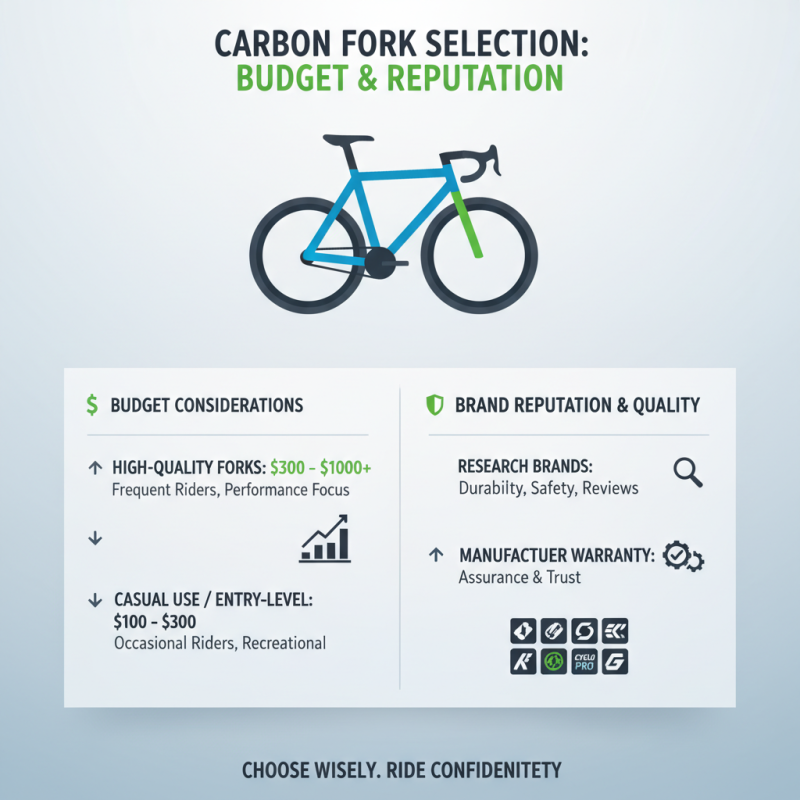
Selecting the right carbon fork for your bike is crucial. Budget plays a significant role in this choice. Research indicates that high-quality carbon forks can range from $300 to over $1,000. You need to consider your riding style and frequency. If you ride often, investing more might be wise. Conversely, a lower-priced option may suffice for casual cyclists.
Brand reputation adds another layer to your decision. According to a 2023 cycling industry report, 42% of riders prefer established brands. Newer brands could offer innovative designs, but they often lack a proven track record. Reviews and user feedback are essential here. Check forums and cycling communities for real-life experiences.
Remember, it’s not just about price and brand. Look for detailed specifications like weight and stiffness. A fork might look appealing but could perform poorly on rough terrain. The wrong choice can lead to a frustrating riding experience. Be sure to weigh your options. Take your time. Quality matters.