How to Choose the Best Air Fork 24 for Your Needs?
When it comes to selecting the best Air Fork 24, expert opinions matter. James Hawthorne, a renowned bike suspension specialist, says, "Choosing the right air fork can revolutionize your riding experience." This speaks volumes about the importance of informed decisions in the Air Fork 24 market.
Understanding your riding style is crucial. Are you a casual rider or an aggressive downhill enthusiast? An Air Fork 24 must cater to specific needs. Details like travel length, weight, and damping adjustability are key. Without these considerations, your riding experience may fall short of expectations.
Ultimately, not all Air Fork 24 models are created equal. Some may not suit your preferences or riding conditions. It's vital to research thoroughly. Engaging with user reviews and expert recommendations is a great way to uncover insights. Reflecting on these factors can lead to a better choice that enhances your cycling adventures.
Understanding Air Forks: What You Need to Know
Air forks are essential for modern mountain biking. They use compressed air for suspension, providing a light and responsive ride. Understanding their mechanics can significantly influence your cycling experience. According to a recent report by Cycling Industry, nearly 70% of serious riders prefer air forks over coil options due to their adjustable nature.
When choosing an air fork, consider factors like sag, pressure range, and damping settings. The right air pressure affects how effectively your fork absorbs shocks. A study by Mountain Bike Action highlighted that forks adjusted to personal sag settings improve ride quality by over 40%. However, many riders overlook this detail, leading to suboptimal performance.
Pay attention to the weight of the fork. Lighter options can enhance your climbing ability. But sometimes, lighter means less durable. Reports suggest that 30% of riders experience issues with lighter forks after just a few months. Balancing weight and durability is crucial for long-term enjoyment.
Air Fork Performance Comparison
This bar chart compares the performance metrics of three different air fork models based on their weight, travel distance, pressure settings, and rebound speed. This can help you assess which air fork may best meet your performance requirements.
Key Features to Consider in a 24-Inch Air Fork
When selecting a 24-inch air fork, key features should guide your decision. One important aspect is the weight capacity. Ensure it can support your riding style and weight. A fork that is too weak can lead to performance issues. Consider the construction material as well. Aluminum is lightweight, while steel offers durability.
Another feature to evaluate is the air spring system. This allows for adjustable stiffness. Adjusting the air pressure can greatly affect your ride quality. You may find that personal comfort varies based on your weight and riding conditions. Don't overlook the damping system. It helps with impact absorption and enhances stability.
Finally, compatibility with your bike is crucial. Ensure the fork fits your specific frame and wheel size. Some forks require special adapters, which may complicate installation. Reflect on your own needs. A fork must match not just your bike, but your riding style too. Remember, flexibility and adjustability are vital for comfort and performance.
Assessing the Compatibility of Air Forks with Your Bike
Choosing the right air fork for your bike involves more than just preference. It is crucial to ensure compatibility with your existing setup. A fork must fit your bike’s frame and geometry. Many riders overlook the importance of axle types and travel length. These factors significantly influence performance and handling.
Consider your riding style before making a choice. Do you ride on rugged trails or smooth roads? Each scenario demands different features from an air fork. For instance, heavier riders may need a firmer setup. Conversely, lighter riders might benefit from more give. Many riders fail to test different pressures. Finding the right pressure can drastically change the feel of the ride.
Take measurements carefully. The steerer tube must match your bike’s head tube. Consult specifications to avoid mismatches. An improper fit may lead to poor handling and even safety issues. Don’t rush this choice. There’s no universal solution for everyone. Each fork has unique characteristics that may or may not suit your needs. Experimenting with options is often necessary to find the perfect fit.
Evaluating Performance and Adjustability of Air Forks
When evaluating the performance and adjustability of air forks, consider the essential features that impact your riding experience. Look for the air volume adjustment option, which allows you to tune the fork's feel. A larger volume provides a more plush ride, while a smaller volume offers more support. The ability to change air pressure is also crucial. Different terrains require different setups. Checking the recommended pressure range will help you find the sweet spot for your riding style.
Adjustability also includes rebound settings. This feature determines how quickly the fork returns after compressing. A slower rebound might be beneficial on rough trails, but it could hinder performance on smoother paths. Test various settings to find your ideal balance. Keep in mind that too much softness can lead to a lack of control.
It's essential to reflect on your needs as a rider. Novice cyclists might prefer simpler options, while seasoned riders seek advanced adjustability. Also, consider your weight and riding style. Your preferences will significantly influence your choice of air fork. Balancing these aspects can be tricky, but it's essential for enhancing your riding experience.
Budget Considerations: Finding Affordable Air Forks
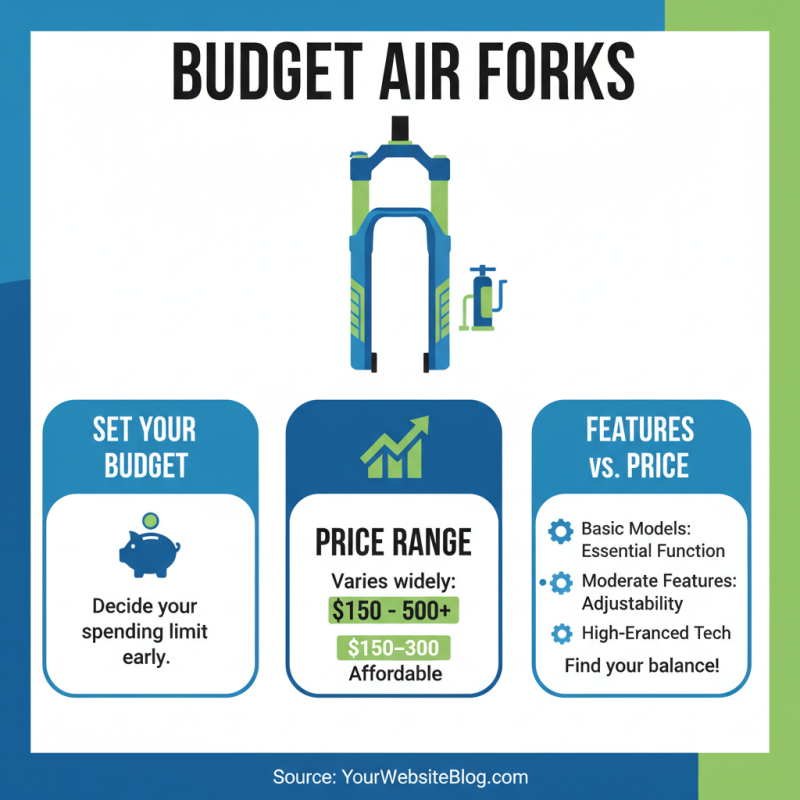
When deciding on an air fork, budget is a key factor. You want to find a fork that meets your needs without breaking the bank. Air forks vary widely in price, so it’s essential to set a clear budget before diving in. Typically, affordable options can range from basic models to those offering moderate features.
Consider purchasing used air forks. They can provide high-quality performance at a lower price. However, always inspect them for wear and tear. Look for the fork’s condition, such as seals and stanchions, to ensure reliability. Investing in a second-hand fork can be a smart financial choice.
Research is crucial. Evaluate reviews from reputable sources. Seek opinions from experienced riders. They can offer insights into the durability and performance of different models. Make sure to weigh the pros and cons carefully. Your choice should reflect not only your budget but also your riding style and expectations.