Leave Your Message

Best Bicycle Chopper Forks Manufacturers in China?

Choosing the best Bicycle Chopper Forks manufacturers in China starts with fit, not a glossy catalogue. A chopper’s long front end makes fork geometry especially visible—and mistakes can affect handling. Check the axle-to-crown length, rake, steerer diameter, axle type, brake mounts, and tire clearance against the frame. Fit comes first. A polished finish is useful, but it cannot fix incompatible dimensions.

The broader market offers context, not a verdict on individual suppliers. Fortune Business Insights valued the global bicycle market at USD 64.62 billion in 2023 and projected USD 109.95 billion by 2032. Those figures cover bicycles overall, not chopper forks, so they should not be treated as proof of demand or factory quality. Buyers should request dimensioned drawings, material specifications, production samples, and documented inspection procedures. Ask how the manufacturer checks alignment, weld consistency, and finish quality, and whether the same checks apply to repeat orders. Details matter. Compare lead times, customization limits, communication, and warranty terms alongside price. A supplier may describe a fork as heavy-duty without showing how that claim is verified. That deserves a follow-up. This guide examines practical ways to compare Chinese manufacturers and identify the evidence behind their claims. Even careful checks cannot remove every sourcing risk; that is worth remembering.
Best Bicycle Chopper Forks Manufacturers in China?

Understanding Bicycle Chopper Forks and Their Main Types

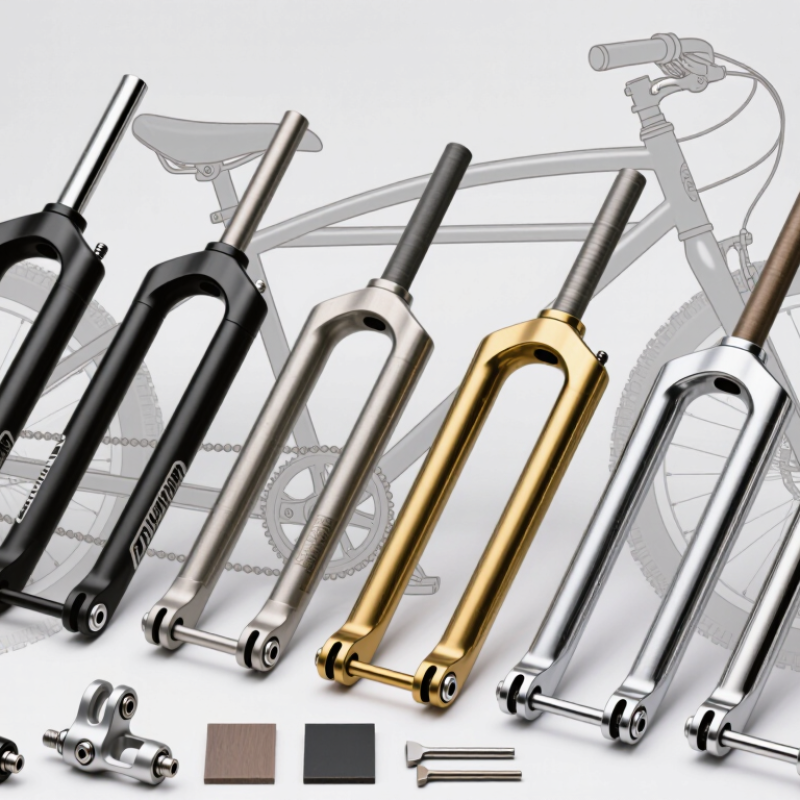
Bicycle chopper forks shape a bike’s stance, but they also affect steering and ride feel. Three common types are rigid, springer, and telescopic forks. Rigid forks have no moving suspension parts, so they are simple and direct. Springer forks use visible springs and linked arms to absorb some bumps. Telescopic forks slide within paired tubes and are more familiar on many modern bicycles. Each type changes the front end’s appearance and handling.

Fork length and rake matter. A longer fork can raise the front wheel and alter steering response, while an unsuitable rake may make the bike feel awkward or unstable. Check the frame’s head tube, wheel size, brake mounts, and axle fit before choosing a fork. A careful workshop check can catch mismatches early. Looks matter, but fit matters more. Even small measurements deserve attention; it is easy to assume two forks are interchangeable when they are not.

Tips: Measure the existing fork from axle to crown, and confirm the steerer tube fits the frame. Ask a qualified bicycle technician to assess compatibility, especially when changing fork length. Test the finished bike slowly in a clear area. A stylish setup can still need adjustment.

How Chopper Forks Are Designed and Manufactured

How Chopper Forks Are Designed and Manufactured

A chopper fork starts with geometry, not chrome. Designers set rake, length, and axle position to balance the long silhouette with predictable steering. A few millimeters matter. Engineers then select tubing, often steel, and specify wall thickness, weld locations, and dropouts. The World Steel Association’s World Steel in Figures 2024 reports China produced 1,019.1 million tonnes of crude steel in 2023. That scale signals a large materials sector, not proof that any individual fork is well made.

In production, tubes are cut, formed, aligned in a jig, and welded; the assembly is checked for straightness before finishing. Skilled manufacturers also inspect welds and verify dimensions, because a polished surface can hide a poor joint. ISO 4210-6:2023 sets out bicycle frame and fork test methods, including fatigue and impact testing. Buyers should ask how a fork was tested and whether the test configuration matches its intended bicycle and use. Long forks can change handling. That trade-off is easy to understate. A useful specification lists material, dimensions, finish, and test evidence—not just appearance. Even a careful process can miss defects, so traceable inspection records matter.

Best Bicycle Chopper Forks Manufacturers in China? - How Chopper Forks Are Designed and Manufactured

A practical guide to comparing chopper fork designs and manufacturing capabilities. Values and processes below are general engineering reference points, not specifications for every fork; final requirements depend on the frame, wheel, intended use, and applicable safety standards.

Design or Manufacturing Area What to Specify or Check Common Practice Why It Matters
Fork style Rigid fork, springer fork, or another suspension arrangement Rigid designs use fixed blades; springer designs add a linkage and spring assembly. The style affects ride behavior, maintenance, packaging, and the parts that need inspection.
Geometry and handling Axle-to-crown length, fork offset, head angle, wheel size, and resulting trail Set geometry as a matched system; there is no single rake or offset suitable for all chopper bicycles. Changing fork length or offset changes steering geometry and can affect stability and handling.
Material selection Material grade, tube dimensions, wall thickness, and documented material traceability Steel alloys, including chromoly grades, are used in some bicycle fork applications; the appropriate material depends on design and process. Material strength alone does not establish fork safety; geometry, joints, fabrication, and testing also matter.
Fabrication and joining Cutting, forming, fixture alignment, welding procedure, and control of heat distortion Fork components are commonly formed and joined using controlled fixtures; the process should suit the specified material and design. Poor alignment or inconsistent joints can affect wheel tracking, fit, and structural integrity.
Steerer and headset fit Steerer diameter, length, interface type, and compatibility with the frame and headset Confirm the exact dimensions and interface before production; headset standards and frame requirements vary. A mismatch can prevent correct assembly or produce an unsafe bearing fit.
Wheel and brake interfaces Wheel size, axle and dropout dimensions, tire clearance, and brake type or mounting points Specify the intended wheel, tire, axle, and braking system together; not every fork supports every brake arrangement. Correct interfaces and adequate clearance are essential for assembly and reliable braking.
Inspection and testing Dimensional checks, visual weld inspection, and documented structural testing appropriate to the design Agree on acceptance criteria and test methods before ordering; applicable bicycle standards depend on product category and intended use. A clear inspection plan makes quality claims verifiable and helps identify defects before shipment.
Finish and corrosion protection Surface preparation, coating type, coverage, and protection of mating surfaces Coatings such as paint or powder coating are used on bicycle components; preparation and coverage affect finish quality and protection. A durable finish helps protect exposed surfaces, while excessive coating on interfaces can interfere with fit.
Supplier evaluation Engineering drawings, sample approval, process controls, inspection records, and change management Request a dimensioned drawing and a production sample; confirm that revisions and inspection results are recorded. These checks provide a practical basis for comparing manufacturing capability without relying on unverified rankings.

Criteria for Evaluating Chinese Chopper Fork Manufacturers

When comparing Chinese chopper fork manufacturers, look beyond polished product photos. Ask for the fork’s material specification, wall thickness, and documented production tolerances. A credible supplier should explain how these details affect strength, weight, and fit with the intended frame. Specific answers matter.

Inspect welds, alignment, and surface finish on a physical sample when possible. Check that the steerer tube and axle mounts match your design measurements, not just a general drawing. Tiny flaws can matter. Ask how the factory checks dimensions and records results across production batches. Photos help, but they cannot replace measurements or a hands-on inspection.

Request evidence of relevant fatigue and load testing, including test methods and results. A simple claim of “quality tested” is not enough. Ask to see it. Also review material traceability, inspection records, packaging, and stated lead times. Clear communication is part of quality: the manufacturer should flag design limits rather than agree to every request. Compare responses from several suppliers, and keep notes on unanswered questions. I would not treat a sample as proof that every later batch will match; verify production controls and agree on acceptable tolerances before ordering.

Best Bicycle Chopper Forks Manufacturers in China?

Criteria for Evaluating Chinese Chopper Fork Manufacturers

Suggested evaluation weights for comparing manufacturers: prioritize safety and material quality, followed by dimensional compatibility, production consistency, and customization. These percentages are a practical scoring framework, not measured market-survey results or ratings of specific companies.

Comparing Manufacturers by Quality, Customization, and Capacity

When comparing bicycle chopper fork manufacturers in China, look beyond polished product photos. Check weld consistency, straightness, surface finish, and the dimensions that affect frame and wheel fit. A long fork can change steering feel, so request clear measurements for axle spacing, rake, and brake mounts. Ask how materials are specified and how finished parts are inspected. Details matter.

Customization is useful only when changes are documented and repeatable. Share a drawing, confirm revision numbers, and ask whether the factory can make a sample before a larger order. A good sample does not prove every production fork will match. Ask for evidence of in-process checks and batch records, where available. Then compare capacity: realistic monthly output, tooling availability, and lead times during busy periods. Large capacity sounds reassuring, but consistency matters more than a high number. Smaller runs may allow closer review, though they can cost more per unit. There is no perfect shortcut. Review the trade-offs against your design, budget, and delivery needs.

How to Choose and Verify a Suitable Chinese Supplier

Choosing a Chinese bicycle chopper fork starts with fit, not appearance. Confirm steerer diameter, axle-to-crown length, offset, wheel size, brake mounts, and intended load. Ask for a dimensioned drawing and material specification before requesting a sample. A fork that looks sturdy may still have poor clearance or inconsistent alignment. Small details matter.

Use ISO 4210-6:2023 as a reference for frame and fork test methods, while checking whether its requirements suit your specific chopper design. Request test reports tied to the exact fork model, plus material certificates and batch inspection records. Photos are not proof. Ask how the supplier controls welding, heat treatment, and final alignment. Then measure a sample yourself or use an independent testing laboratory. PeopleForBikes’ 2024 U.S. Bicycling Participation Report estimated that 112 million people rode bicycles in 2023. That figure signals broad cycling participation, not proof of any supplier’s quality. A factory audit can reveal useful details, but one visit cannot guarantee every production batch. I would still verify a pre-production sample against the drawing; paperwork can look complete while dimensions drift.