What is a 26 Inch Mountain Bike Fork and How to Choose the Right One
Choosing the right 26 Inch Mountain Bike Fork can greatly enhance your riding experience. Expert mountain biker Sarah Thompson once remarked, “The fork can make or break your ride.” This highlights how crucial the right fork is for performance and comfort.
A 26 Inch Mountain Bike Fork influences your bike's handling and suspension. It’s essential to understand the different types available. Rigid, suspension, and adjustable forks all serve different needs. Each option offers unique benefits and drawbacks, impacting both speed and terrain navigation.
When selecting a fork, consider your riding style. Are you a casual cyclist or a thrill-seeker? This choice significantly alters your bike's capabilities. Reflect on past rides; were there moments where a more suitable fork would have improved your experience? Making an informed decision will lead to a more enjoyable ride.
What is a 26 Inch Mountain Bike Fork: An Overview of Specifications
A 26-inch mountain bike fork is a crucial component for any cyclist looking for versatility and performance. Its size is designed to accommodate 26-inch wheels, which provide a responsive feel on various trails. The fork plays a significant role in absorbing shocks and impacts from rough terrains. According to industry reports, forks with a travel range between 80 mm to 150 mm are common. This range is suitable for different styles of mountain biking, whether you're tackling downhill races or casual rides.
When choosing the right fork, consider the material. Aluminum and carbon fiber are popular options. Aluminum is a common choice for durability and cost-effectiveness. Carbon fiber is lightweight but often pricier. The weight of the fork can impact your ride. For instance, a lighter fork may enhance climbing efficiency but could compromise strength on rugged trails. Ensure to check the steerer tube size, as a mismatched size can lead to compatibility issues.
In addition to these specifications, look into the adjustment mechanisms. Some forks offer lockout features for better control on smooth surfaces. However, this can complicate the setup process. Many cyclists struggle with finding the right balance between stiffness and comfort. While stiff forks improve handling, they may result in a harsh ride. Be prepared to experiment with different setups. Adjusting the air pressure and damping settings can drastically affect performance.
Understanding the Anatomy of a Mountain Bike Fork
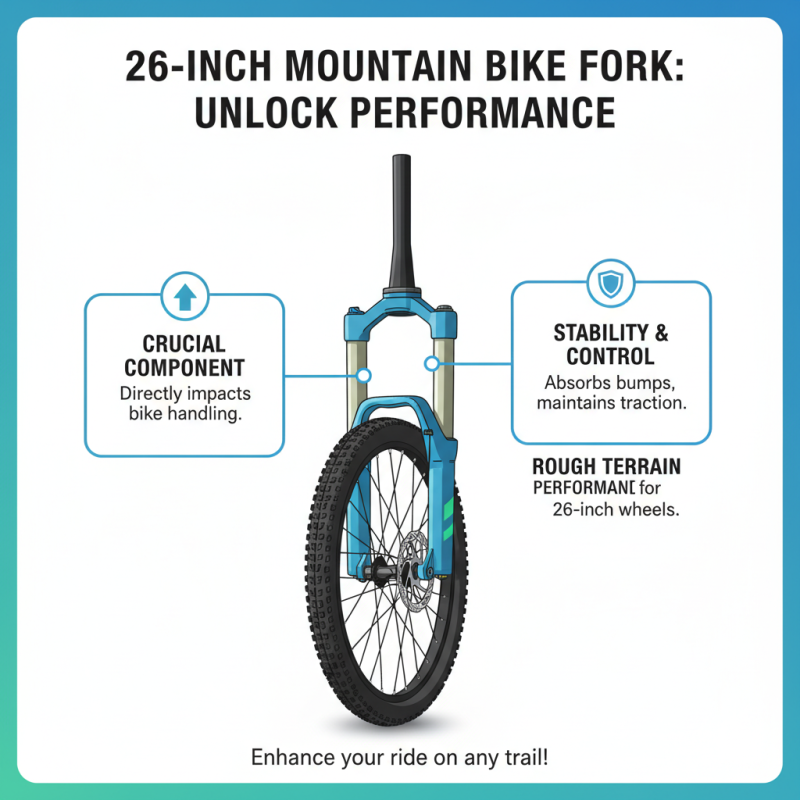
The mountain bike fork is a crucial component. It directly affects how a bike performs on rough terrains. A 26-inch mountain bike fork is designed to provide stability and control.
Understanding its anatomy is essential. Mountain bike forks come with two main types: rigid and suspension. Rigid forks offer no cushioning. They are lightweight and precise but can be unforgiving on bumpy trails. Suspension forks, on the other hand, absorb shocks. They allow for better traction and comfort when riding over obstacles.
Selecting the right fork can be daunting. Consider travel, which refers to how much the fork can compress. Too little travel can lead to harsh rides, while too much can hinder performance. Look at weight as well. A heavier fork may slow you down. Ensure that your fork matches your bike frame and style of riding. Each choice has its trade-offs, and reflecting on your riding needs is key.
Key Features to Consider When Selecting a Mountain Bike Fork
When selecting a 26-inch mountain bike fork, several key features must be considered. The fork's travel is crucial. This refers to how far the suspension can compress. Most mountain bikers prefer between 100mm and 150mm of travel for varied terrains. Stiffer forks handle rough trails better. A good option balances responsiveness and stability.
The material of the fork impacts weight and durability. Aluminum forks are lightweight, while steel offers strength. However, aluminum can sometimes lack comfort. You might also consider fork type. A suspension fork absorbs bumps and enhances control. Rigid forks are lighter and offer a direct connection to the bike’s frame. Think about your riding style when choosing.
Another important aspect is adjustability. Some forks allow you to tweak settings for different rides. This feature can improve your experience. However, if you have limited experience, simplifying adjustments may be beneficial. It can be challenging to decide, so always test different options. Riding with various forks helps you find what works best. Listening to feedback from your experiences is essential.
Comparative Analysis of Suspension Types for 26 Inch Forks
When choosing a 26-inch mountain bike fork, understanding suspension types is crucial. The most common options are coil and air suspensions. Each type affects performance and handling significantly. A report from the International Mountain Bicycling Association reveals that riders prefer air suspensions for their adjustability and weight, while coil forks are often more durable. This information indicates that the fork type can influence overall ride quality.
Coil forks offer a smooth ride, especially on rocky terrain. They absorb impacts effectively, making them popular among downhill riders. However, they can feel heavy and less responsive. In contrast, air forks are adjustable. Riders can change the air pressure to suit their weight and riding style. Yet, they require consistent maintenance. A survey by Cycling Weekly found that 65% of riders favor air suspensions for varied terrain adaptability.
Despite these insights, choosing the right fork also involves personal preferences. Some riders love the plush feel of coils. Others appreciate the customization air forks provide. There is no one-size-fits-all solution. Every cyclist must consider their riding conditions and style to find the best match. Careful reflection on these factors can lead to a more enjoyable riding experience.
Industry Standards and Measurements for Mountain Bike Fork Performance
When considering a 26-inch mountain bike fork, understanding industry standards is crucial. Fork performance is measured through factors like travel, steerer diameter, weight, and damping systems. Standard travel lengths typically range from 80mm to 200mm. Most riders opt for forks with 120mm to 160mm travel for versatile trail riding.
Steerer tube diameter affects compatibility and stiffness. Common sizes include 1-inch and 1.5-inch options. A wider steerer tube often provides better handling but can increase bike weight. According to industry reports, a fork’s weight can vary significantly. Lightweight options may weigh around 3 pounds, while heavier-duty forks can exceed 5 pounds, which could impact performance.
Damping systems are another focal point. They range from basic coil springs to advanced air and adjustable platforms. These systems can enhance responsiveness but require regular maintenance, which some cyclists often overlook. Understanding these measurements helps in making an informed choice, though many riders might still find themselves questioning if they're choosing the best option for their riding style.
26 Inch Mountain Bike Fork Performance Metrics
This chart represents standard measurements of 26 Inch Mountain Bike Forks, including weight, travel, stiffness, damping, and axle diameter. Understanding these metrics can help you choose the right fork for your mountain biking needs.